

The Coffee Shop Ledger That Changed Everything
A small coffee shop in Lahore keeps a paper notebook beside the till. Regulars buy now and settle later. The owner writes each tab in the notebook: a name, a date, an amount. One rainy evening, a page goes missing. Two customers swear they paid. The owner swears they did not. Nobody can prove anything, because there is only one copy of that notebook, and one person controls it.
Now imagine a different notebook. Every customer holds an identical copy. Whenever someone adds a tab, every copy updates together. If one copy changes quietly in the night, the other copies expose the cheat at once. That shared, tamper-evident notebook is the heart of blockchain technology. If you have ever asked what is blockchain and how does it work, this guide answers you in plain English, step by step, with no jargon left unexplained.
Here is the surprising part. The first blockchain, Bitcoin, launched in 2009. It has run day and night ever since, without a head office, without a boss, and without anyone able to rewrite its history. Banks settle payments only on working days. This public ledger never closes. Yet many smart people still cannot explain how blockchain works in simple words. They have heard the hype. They have heard the scams. The middle ground, the actual mechanism, stays fuzzy.
That fuzziness costs people money and confidence. Beginners buy coins they do not understand. Others dismiss the whole idea as a fad. This article fixes that gap. You will learn what a block is, what a hash does, why the chain cannot quietly change, and where this technology genuinely helps. You will also learn its real limits, because an honest guide owes you both sides. More guides like this one live in our Crypto section, and this piece is the friendly starting point before our deeper explainers.
Executive Summary
- Blockchain is a shared record book that many computers hold at once. No single person controls it, and nobody can secretly edit old entries.
- Records group into blocks. Each block carries a unique fingerprint called a hash. Each block also stores the fingerprint of the block before it, which links them into a chain.
- Computers on the network, called nodes, check new entries and agree on the true version through rules called consensus. Bitcoin uses proof of work. Ethereum now uses proof of stake.
- Your money or records sit behind two keys. A public key works like an account number you can share. A private key works like a signature only you should hold.
- Blockchains power more than coins. Teams use them for supply chain tracking, digital identity, land records, and even voting pilots.
- The technology has real limits: speed, energy use on some networks, high fees at busy times, and no undo button when you send to a wrong address.
- Explorers like Blockchain.com Explorer, Blockchair and Etherscan let anyone inspect public chains for free, which makes the system unusually transparent.
By the end, you will be able to explain what a blockchain is to a friend in two minutes. You will also know which claims about it deserve a raised eyebrow. That calm, clear understanding is the best protection a beginner can carry into crypto.
Blockchain Explained: The Basic Idea
A definition you can actually remember
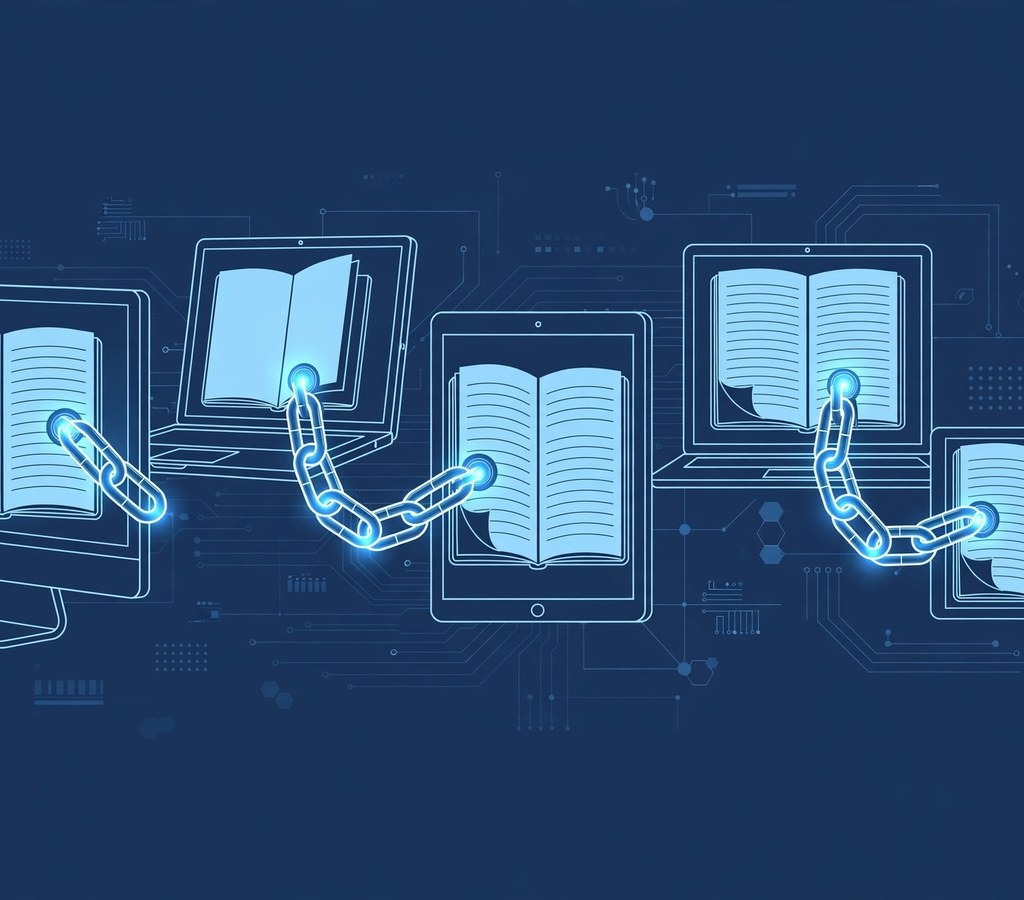
So, what is blockchain in the shortest honest answer? A blockchain is a database that many independent computers share and update together. Ordinary databases live on one company’s server. One admin can edit or delete rows. A blockchain spreads copies across thousands of machines, and its rules make old records practically impossible to change.
Three words unlock the whole concept: distributed, append-only, and verified. Distributed means many copies exist. Append-only means you can add new entries, but you cannot erase old ones. Verified means the network checks every new entry before it joins the record. Hold those three words, and most blockchain news suddenly makes sense.
Why did anyone invent this?
Digital money had a stubborn problem for decades. A digital file is easy to copy. So how do you stop someone spending the same digital coin twice? Banks solve this with a private ledger and total control. Satoshi Nakamoto, Bitcoin’s unknown creator, wanted a solution with no central controller at all. The Bitcoin white paper of 2008 proposed the blockchain as that solution. Our guide on what Bitcoin is backed by explores the trust question behind that invention in more depth.
The core trick is simple. Do not hide the ledger. Publish it. Let everyone keep a copy and check everyone else. Cheating then requires overpowering most of the network at once, which costs far more than honest participation pays. That economic logic, more than any single piece of code, keeps a public blockchain honest.
The Building Blocks: Blocks, Hashes and Chains
What is a block?
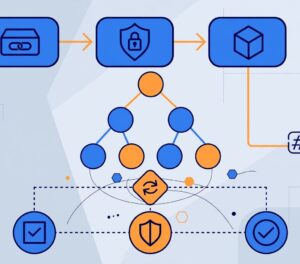
A block is a batch of records bundled together. Think of it as one filled page in the shared notebook. A Bitcoin block typically holds thousands of transactions. Each block also carries a timestamp and a reference to the page before it. When a block fills and passes the network’s checks, the network seals it and starts a fresh page.
Blocks arrive at a steady rhythm on most networks. Bitcoin adds a block roughly every ten minutes on average. Ethereum adds one roughly every twelve seconds. The rhythm is a design choice, not an accident. Slower chains favour caution. Faster chains favour convenience. Neither is automatically better.
What is a hash?
A hash is a digital fingerprint. A computer runs data through a hash function, and out comes a fixed-length string of characters. Change even one letter in the input, and the fingerprint changes completely. You cannot reverse the process either. A fingerprint tells you nothing about the original page, yet it proves instantly whether a copy matches.
Here is a kitchen analogy. A hash is like the smell of a baked cake. You cannot rebuild the cake from the smell. But if someone swaps an ingredient, the smell changes, and you notice at once. Every block’s hash fingerprints its contents in exactly that spirit.
Why hashes make cheating obvious
Each block stores two fingerprints: its own, and the previous block’s hash. Now imagine a cheat edits an old transaction. That block’s fingerprint changes instantly. But the next block still holds the old fingerprint. The mismatch screams. To hide the edit, the cheat must rebuild every later block too, faster than the honest network keeps adding new ones. On a large public network, that race is hopeless in practice.
Why the chain part matters
The chain is simply blocks linked in order by those fingerprints. Order matters because money needs sequence: you cannot spend coins before you receive them. The chain also gives everyone the same history. When two copies disagree, the network follows clear rules to pick the valid one, usually the chain with the most accumulated work or stake behind it. That shared agreement about history is what people mean by blockchain security.
Nodes: The Computers That Keep the Copies
A node is any computer that runs the blockchain software and holds a copy of the ledger. Some nodes also help create new blocks. Others simply verify and relay information. You could run a node on a modest home computer for many networks. Thousands of ordinary people do exactly that.
Nodes give the system its resilience. There is no single server to seize, hack or switch off. If one node fails, thousands of copies survive. If one node starts lying, the others ignore it, because each node checks the rules itself instead of trusting its neighbours. This is why people call blockchain decentralised. No centre exists to fail.
Not every copy carries the same weight, though. Full nodes store the complete history and verify everything. Light nodes store only the parts they need and rely on full nodes for the rest. Your phone wallet usually works as a light client, which is fine for daily use. The full nodes form the network’s backbone of trust.
How Blockchain Works, Step by Step
Let us walk one payment through the whole system. Say Sara sends a small amount of Bitcoin to her brother in another city. Understanding what is blockchain and how does it work becomes easy when you follow a real example like this.
- Sara creates the transaction. Her wallet app builds a message: her address, her brother’s address, and the amount.
- She signs it with her private key. The signature proves she authorised the payment. It reveals nothing about the key itself.
- The wallet broadcasts the message. Nearby nodes receive it and pass it along, like a rumour spreading through a market.
- Nodes check the rules. Is the signature valid? Does Sara actually hold the coins? Has she already spent them elsewhere? Any failed check kills the transaction.
- Valid transactions wait in a pool. This waiting area is often called the mempool. Block producers pick from it, usually favouring higher fees.
- A producer bundles transactions into a block. On Bitcoin, a miner does this. On Ethereum, a validator does it.
- The network reaches consensus. Other nodes verify the new block against every rule. If it passes, they add it to their copy of the chain.
- The block becomes permanent history. Sara’s brother sees the payment, then sees more blocks stack on top, which makes reversal steadily harder.
Notice what never happened. No bank approved the transfer. No office hours applied. No single database held the truth. The truth emerged from many independent checks. That is how a blockchain works at its core, whether the asset is money, a land record, or a shipping update.

Consensus: How Strangers Agree Without a Boss
Proof of work, in brief
Proof of work (PoW) secures Bitcoin. Miners race to solve a hard maths puzzle that takes real computing power and electricity. The first miner to solve it proposes the next block. Others verify the solution in a blink. Cheating means outspending the entire honest network, which is ruinously expensive. The puzzle difficulty adjusts automatically, so blocks keep their steady rhythm even as more miners join.
Proof of stake, in brief
Proof of stake (PoS) takes a different route. Validators lock up, or stake, some of the network’s own coins as a deposit. The protocol picks validators to propose blocks, partly at random, weighted by stake. Honest work earns rewards. Dishonest work risks losing the deposit, a punishment called slashing. Ethereum switched to this model in 2022 and cut its energy use dramatically. No mining race means no warehouse of roaring machines.
| Feature | Proof of Work | Proof of Stake |
|---|---|---|
| Who secures the network | Miners with computing hardware | Validators with staked coins |
| Cost of attacking | Enormous electricity and hardware spend | Buying a huge share of the coin supply |
| Energy use | High | Very low by comparison |
| Penalty for cheating | Wasted electricity and hardware time | Loss of staked deposit (slashing) |
| Well-known example | Bitcoin | Ethereum |
| Main criticism | Energy footprint | Wealth can concentrate influence |
Neither system is magic, and neither is free of trade-offs. PoW buys security with energy. PoS buys efficiency with economic deposits. When you read heated arguments online, they usually argue about this table, whether the writers admit it or not. Our Cryptocurrency archive follows how these debates evolve across different coins.
Wallets and Keys: Owning Something on a Blockchain
The two keys that run your account
A blockchain account rests on a pair of linked keys. Your public key, usually shown as an address, is safe to share. People use it to send you funds, like an email address for value. Your private key is the opposite: a secret that proves ownership and signs transactions. Whoever holds the private key controls the funds. Full stop. There is no password reset and no support desk that can restore it.
Most wallets show you a seed phrase instead: twelve or twenty-four ordinary words. Those words can rebuild your keys on a new device. Guard them like the deed to a house. Anyone who finds them can empty the wallet, and no court order can claw the coins back. Our detailed crypto wallet guide walks through safe storage habits step by step.
Hot wallets, cold wallets, and custodians
A hot wallet lives on an internet-connected device. It is convenient for small, everyday amounts. A cold wallet keeps keys offline, often on a small hardware device. It suits larger, long-term holdings. A third option leaves keys with a company: when you hold coins on an exchange, the exchange holds the keys for you. That is easy, but it means trusting the company completely. Our comparison in the complete coin wallet guide helps you weigh those choices honestly.
Beginners often ask where the coins themselves live. Surprisingly, coins never leave the blockchain. The ledger simply records that an address controls them. Your wallet holds the key, not the coins, rather like a key to a safety deposit box. The box stays in the vault. Lose the key, and the contents might as well not exist.
Public, Private and Consortium Chains
Not every blockchain opens its doors to the public. Designers choose who may read the ledger, who may add to it, and who may validate it. That choice changes everything about speed, privacy and trust.
| Type | Who can read it | Who can validate | Typical examples | Best suited for |
|---|---|---|---|---|
| Public (permissionless) | Anyone | Anyone who follows the rules | Bitcoin, Ethereum | Open money and public records |
| Private (permissioned) | Invited members only | The owning organisation | Internal company ledgers | Controlled business data |
| Consortium | Member organisations | A group of known partners | Trade and shipping networks | Industries that must share data |
Public chains trade speed for openness and censorship resistance. Private chains trade openness for speed and privacy. Neither choice is wrong in itself. The honest question is always: trust between whom, checked by whom? If one company controls every validator, a normal database may serve it better. Blockchain earns its keep when several parties must share one history and none of them should control it alone. Much of our Crypto coverage returns to that single test.
Real Uses Beyond Cryptocurrency
Supply chains you can audit
A bag of coffee crosses many hands before it reaches your cup. Farmers, truckers, warehouses and roasters each keep separate records. When quality fails, blame travels slowly. A shared ledger lets each handler add a signed update that the next handler can trust. Retailers already pilot this for food safety, because tracing a contaminated batch takes minutes instead of days. The record does not make the coffee better. It makes the story of the coffee checkable.
Identity and records
Proving who you are online still depends on paper documents and central databases that leak. Blockchain-based identity systems let a person hold their own credentials and share only the proof needed. A university could issue a degree as a signed digital credential. An employer verifies it in seconds, without phoning the university. The same pattern suits medical records, land titles and licences, anywhere forgery hurts and verification is slow.
Voting and public records
Elections need two things that fight each other: secrecy for the voter, and transparency for the count. Several regions have tested blockchain-based voting pilots and audit trails for exactly this reason. The idea is not to replace officials with software. It is to give every voter a way to confirm their vote counted, while observers confirm the totals match the records. We examined the promises and the hard security questions in our guide to blockchain for voting systems.
Smart contracts: agreements that run themselves
Some blockchains, above all Ethereum, run small programs called smart contracts. A smart contract is an agreement written in code: if this happens, then do that. A vending machine is the classic comparison. You insert money, you choose a snack, the machine releases it. No cashier, no argument. Smart contracts power lending markets, games, digital art ownership and automatic royalty payments. They also carry risk, because a bug in the code becomes a bug in the agreement, and code is hard to argue with after the fact.
Benefits and Drawbacks, Honestly Weighed
| Benefits | Drawbacks |
|---|---|
| No single point of failure; thousands of copies survive any outage | Public chains can be slow and congested at peak times |
| Old records are extremely hard to alter secretly | Transactions are effectively irreversible once confirmed |
| Anyone can audit a public ledger at any time | Public ledgers expose transaction patterns to anyone watching |
| Transfers can cross borders without correspondent banks | Fees on popular networks rise sharply during busy periods |
| Programmable value through smart contracts | Bugs in smart contracts can lock or lose funds |
The honest summary is boring and true: blockchain is a powerful tool for shared truth between parties who do not fully trust each other. Where one trusted party already runs things well, a normal database is cheaper and faster. Sceptics who say this are not enemies of the technology. They are describing its proper job. Our writers make the same point when readers ask is crypto dead after every market dip: the ledger keeps working through every headline.
Common Misconceptions About Blockchain
“Blockchain and Bitcoin are the same thing”
They are not. Bitcoin is one application that runs on the first blockchain. Blaming blockchain for Bitcoin’s price swings is like blaming the internet for one website’s stock price. The technology also supports other coins, business ledgers and public records that have nothing to do with speculation.
“Blockchain data is secret”
Public blockchains are the opposite of secret. Every transaction sits in the open for anyone to inspect. Names are not attached directly, but addresses are visible, and investigators routinely trace flows between them. Call it pseudonymous, not anonymous. This surprises beginners who believed the movie version of crypto.
“A blockchain can store anything, so it proves truth”
A blockchain proves a record has not changed since it was written. It cannot prove the record was true when written. If a supplier logs a false harvest date, the chain preserves the lie beautifully. This weakness even has a name: the oracle problem. Real-world data must enter through people or sensors, and that entry point can fail or cheat. Treat any “blockchain-verified” claim with that one question: verified by whom, at the moment of entry?
“More blockchain always means more security”
Security depends on how many independent validators a network truly has, and how costly attack would be. A tiny chain with five friendly validators is far weaker than it sounds. Size, diversity and honest incentives do the protecting, not the word blockchain itself. This is also why our crypto exchange guide tells beginners to prefer large, well-tested networks for serious money.
Common Beginner Mistakes (and How to Avoid Them)
- Sharing the private key or seed phrase. No real company, wallet or “support agent” will ever ask for it. Anyone who asks is a thief. Full stop.
- Sending a first transfer without a test. Send a tiny amount first. Confirm it arrives. Only then send the rest.
- Copying an address from history after malware strikes. Some malware swaps copied addresses. Check the first and last characters every time.
- Confusing the coin with the network. The same coin symbol can exist on several networks. Sending on the wrong network can strand your funds.
- Believing every “blockchain” product uses one. Some marketing borrows the word for an ordinary database. Ask who validates the records. Vague answers are your answer.
Expert Tips for Reading Blockchain Claims
Ask who the nodes are. A network’s honesty lives in its validators. If one company runs them all, you are trusting that company, whatever the brochure says.
Check the explorer yourself. Every serious public chain has a free explorer website. Paste any transaction ID into it and see the record with your own eyes. Two minutes of checking beats two hours of arguing online.
Count confirmations, not promises. A transaction with one block on top of it is recent. Each extra block makes reversal harder. Exchanges wait for several confirmations before crediting deposits for exactly this reason.
Separate the asset from the rails. A blockchain can be sound while a token built on it is worthless, and the reverse debate runs through our Trading coverage weekly. Judge the network, the token and the seller as three different things.
Four Illustrative Scenarios: Blockchain in Real Life
The four scenarios below are illustrative composites. They show typical problems, the approach real teams take, and the lessons that repeat across the industry. They are not reports about named companies.
Scenario 1: The mango exporter and the disputed shipment
Problem: An exporter ships mangoes abroad. The buyer claims the fruit arrived late and warm, and refuses full payment. The exporter’s own logs say the cold chain never broke. Each side holds different records, so the argument stalls for weeks.
Strategy: Both sides agree to log each handover on a shared consortium ledger. Temperature sensors add readings at every transfer point.
Execution: Drivers, warehouse staff and the shipping line sign each update with their own keys. Neither side can quietly edit the shared history later.
Results: In this scenario, the next dispute settles in days. The ledger shows exactly where the temperature rose: a warehouse dock, during a four-hour loading delay.
Lessons: The chain did not prevent the failure. It removed the argument about what happened, which is where most of the cost was hiding.
Scenario 2: The graduate with the forged-degree problem
Problem: A graduate applies for jobs abroad. Employers cannot verify her degree quickly, and forged certificates are common in her field. Genuine candidates wait weeks for manual checks.
Strategy: Her university issues degrees as signed digital credentials anchored to a public blockchain.
Execution: She shares a verification link with each employer. The employer’s system checks the signature and the chain record in seconds, without contacting the university.
Results: In this scenario, her verification drops from weeks to minutes, and the employer trusts the result because the university’s signature cannot be faked quietly.
Lessons: The graduate still owns the credential. The blockchain only proves who issued it and that nobody altered it since.
Scenario 3: The shopkeeper who lost a seed phrase
Problem: A shopkeeper keeps his savings in a phone wallet. The phone dies. He realises he photographed his seed phrase once, then deleted the photo, or so he hopes.
Strategy: With no copy of the phrase, no recovery exists. The network cannot reset his key, because nobody controls the network.
Execution: He tries every backup he owns. The wallet software confirms what the rules already say: the keys are the account.
Results: In this scenario, a portion of his savings stays locked forever. He rebuilds with a hardware wallet, writes the new phrase on paper twice, and stores the copies in two separate safe places.
Lessons: Self-custody trades convenience for responsibility. The same design that stops thieves and freezes also stops rescue. Our homepage links our wallet safety guides for readers in exactly this position.
Scenario 4: The town that audited its own vote count
Problem: A local council runs a small consultative vote. Turnout is fine, but rumours claim the count was adjusted. Trust in the result is low, and officials hold the only records.
Strategy: For the next vote, each ballot receipt is recorded on a public audit ledger, without names attached.
Execution: Voters check their own receipt codes against the ledger. Independent observers download the full record and recount it with their own software.
Results: In this scenario, the recount matches the official total exactly, and the argument ends with evidence instead of statements.
Lessons: The chain did not run the election. It gave strangers a way to verify the count, which is the part distrust always attacks first.
Tools and Platforms That Make Blockchain Visible
You do not need to run a node to explore a blockchain. These well-known tools open the ledger to anyone with a browser. We review ten of them honestly.
1. Blockchain.com Explorer
Pros: Very beginner-friendly, covers Bitcoin and several other chains, shows transactions and blocks in plain layouts. Cons: Less depth for advanced analysis. Pricing: Free. Best use: A first look at how a live block and its transactions actually appear.
2. Blockchair
Pros: Searches many blockchains in one place, with powerful filters and data exports. Cons: The dense interface can overwhelm new users. Pricing: Free tier, with paid plans for heavier API use. Best use: Comparing activity across different chains side by side.
3. Etherscan
Pros: The standard explorer for Ethereum, with rich detail on tokens, smart contracts and validators. Cons: Ethereum family only. Pricing: Free, with paid API tiers. Best use: Checking what a smart contract really did, not what a website claims it did.
4. MetaMask
Pros: The most widely used browser and mobile wallet for Ethereum-style networks, simple to start with. Cons: As a hot wallet, it inherits the risks of the device it runs on. Pricing: Free; optional built-in swaps carry a service fee. Best use: Small everyday interactions with decentralised apps.
5. Ledger
Pros: Hardware wallets that keep private keys offline, supporting many coins from one device. Cons: Costs money, and beginners must learn careful backup habits. Pricing: One-time device purchase. Best use: Long-term storage of amounts you cannot afford to lose.
6. Hyperledger Fabric
Pros: A respected open-source framework for private and consortium chains, backed by the Linux Foundation. Cons: Built for developers and enterprises, not casual users. Pricing: Free and open source; real costs sit in development and hosting. Best use: Business networks where known partners must share one trusted record.
7. IBM Blockchain and Food Trust
Pros: Enterprise-grade support, and its food-traceability network shows supply-chain logging at real scale. Cons: Pricing suits companies, not individuals. Pricing: Commercial contracts. Best use: Large retailers and suppliers who need audited traceability. IBM’s own overview of what blockchain is is also a solid second explainer to compare with this guide.
8. VeChain ToolChain
Pros: Purpose-built for product tracking, pairing physical items with on-chain records through tags and codes. Cons: Focused mainly on supply-chain niches. Pricing: Commercial platform pricing for businesses. Best use: Brands that want customers to verify a product’s journey.
9. Chainalysis
Pros: Industry-standard analytics that trace fund flows for exchanges, banks and investigators. Cons: Professional pricing, and its work underlines how traceable public chains really are. Pricing: Commercial subscriptions. Best use: Compliance teams screening transactions for illicit links.
10. Infura
Pros: Lets apps connect to Ethereum and other networks without running their own nodes, speeding up development. Cons: Adds a service dependency, which purists criticise as a centralising shortcut. Pricing: Free tier, with paid plans as usage grows. Best use: Developers who need reliable node access quickly.
| Tool | Type | Cost | Best for |
|---|---|---|---|
| Blockchain.com Explorer | Public explorer | Free | Beginners viewing Bitcoin blocks |
| Blockchair | Multi-chain explorer | Free tier | Cross-chain searching |
| Etherscan | Ethereum explorer | Free | Smart contract checks |
| MetaMask | Hot wallet | Free | Everyday app use |
| Ledger | Hardware wallet | One-time purchase | Long-term storage |
| Hyperledger Fabric | Private chain framework | Open source | Enterprise networks |
What Does Using a Blockchain Cost?
Costs depend on the network and how busy it is. On public chains, users pay a transaction fee to the miners or validators who process their records. Simple transfers on quiet networks can cost very little. Complex smart contract actions on a congested network can cost far more. Fees are the price of block space, and block space is deliberately limited. That limit is a security choice, and it is also the technology’s most visible growing pain.
Businesses weigh different costs: development, integration with old systems, and training. A private ledger removes public fees but adds hosting and governance costs. The cheapest option is often the honest one nobody wants to hear: if a shared database solves the problem, use the database. Blockchain should win on trust requirements, not on fashion. Readers comparing platforms for their first steps can start on CryptoOrbitZone with our exchange and wallet explainers before spending anything.
Where Blockchain Is Heading
Three trends deserve a calm eye. First, scaling networks built on top of major chains now process everyday payments cheaply, while the main chain settles the final record. Second, tokenisation is moving real assets, like funds and property shares, onto ledgers where they can trade in smaller pieces. Third, governments keep testing digital currencies and record systems, which pushes standards and regulation to mature. None of this guarantees any coin’s price. It does suggest the underlying record-keeping idea has settled in for the long term.
For the original design in the inventor’s own tradition, Bitcoin.org’s walkthrough of how Bitcoin works remains a clear primary source. Ethereum’s official documentation on what Ethereum is does the same job for smart contract chains. Read this guide first for the concepts, then those two for depth.

Frequently Asked Questions
1. What is blockchain and how does it work, in one sentence?
A blockchain is a shared record book held by many computers at once, where new entries are checked by the group, sealed into blocks, and linked by fingerprints so old entries cannot quietly change.
2. Is blockchain the same as Bitcoin?
No. Bitcoin is the first and best-known application of blockchain. The technology also supports other cryptocurrencies, business ledgers, identity systems and public record projects.
3. Who controls a blockchain?
On a public chain, no single person or company does. Thousands of independent nodes enforce the same rules. On a private chain, the owning organisation controls access, which is a deliberate design choice.
4. Can a blockchain be hacked?
Rewriting a large public chain’s history is impractical, because an attacker must overpower the honest majority. Most real losses happen around the edges: stolen private keys, dishonest exchanges and buggy smart contracts. The ledger holds; the endpoints fail.
5. What is a blockchain node?
A node is a computer running the network’s software and holding a copy of the ledger. Nodes check new transactions and blocks against the rules and pass valid ones along.
6. What is the difference between proof of work and proof of stake?
Proof of work secures a chain with computing effort and electricity, as Bitcoin does. Proof of stake secures it with locked-up coins that dishonest validators can lose, as Ethereum does. Both aim to make cheating costlier than honesty.
7. Do I need a wallet to use blockchain?
For cryptocurrencies, yes: a wallet holds your keys and signs your transactions. For reading a public ledger, no: any free explorer website lets you browse blocks and transactions without an account.
8. Are blockchain transactions anonymous?
Not fully. Public chains show addresses and amounts openly, without names attached. Investigators and analytics firms routinely link addresses to real identities. Pseudonymous is the accurate word.
9. Can a blockchain transaction be reversed?
On public chains, confirmed transactions are effectively permanent. There is no central desk that can undo them. This is why test transfers and careful address checks matter so much.
10. What is blockchain used for besides money?
Teams use it for supply-chain tracking, digital identity, academic and medical credentials, land records, voting pilots and automatic agreements called smart contracts. The fit is best where several parties need one shared, tamper-evident history.
Conclusion: A Notebook Nobody Owns, and Everybody Checks
Let us return to that coffee shop notebook. Blockchain simply gives every participant a copy, seals each page with a fingerprint, and lets the group reject any page that breaks the rules. Blocks store the records. Hashes protect them. Nodes hold the copies. Consensus settles disagreements. Wallets and keys decide who can write from which account. That is what is blockchain and how does it work, without a single mystery left standing.
Your next steps are small and safe. Open a free explorer and look at a real block. Read our guides on what backs Bitcoin and on choosing a wallet, and follow new explainers in our Crypto Investment and news sections as your confidence grows. When you later want the shortest possible version, our simple-terms explainer will feel easy, because you now own the full picture underneath it.
The technology will keep evolving: faster layers, new consensus ideas, wider business use. Prices will rise and fall around it, as they always have. The ledger idea underneath, though, answers a permanent human problem: how strangers keep one honest record together. So here is the question to carry away: in your own work or community, which shared record would you trust more if nobody could quietly rewrite it?
Note: This article is educational information only and is not financial advice. Cryptocurrency is volatile and risky. Always do your own research, protect your private keys, and never invest money you cannot afford to lose.