


Introduction
Imagine arriving at a polling station only to discover your name is missing from the voter list. Or perhaps you cast your vote but later wonder whether it was counted correctly. These concerns have challenged election systems for decades. Trust is the foundation of democracy, yet many people still question whether traditional voting methods are secure, transparent, and efficient.
This is where blockchain for voting systems enters the conversation. Originally designed to power cryptocurrencies, blockchain has grown into a technology with applications far beyond finance. Governments, researchers, and technology companies are now exploring how it can improve elections by creating tamper-resistant digital records.
Election fraud is relatively rare in many countries, but concerns about cybersecurity, transparency, accessibility, and public confidence continue to grow. A blockchain-based voting system aims to address these challenges by recording every vote on a distributed ledger that is extremely difficult to alter without detection.
While blockchain is not a perfect solution, it offers exciting possibilities for secure digital elections, remote voting, and transparent vote counting. This guide explains how blockchain voting works, where it excels, where it falls short, and what the future may hold.
Executive Summary
This guide explores everything you need to know about blockchain for voting systems.
You’ll learn:
- What blockchain voting is and how it works.
- The advantages and limitations of decentralized election systems.
- Security best practices.
- Real-world pilot projects.
- Costs and implementation considerations.
- Popular blockchain platforms used for voting applications.
- Future trends in digital democracy.
Whether you are a policymaker, developer, researcher, or simply curious about election technology, this guide provides practical insights backed by current industry knowledge.
What Is Blockchain for Voting Systems?
Blockchain for voting systems refers to using a decentralized digital ledger to record, verify, and protect election votes.
Instead of storing votes in a single centralized database, blockchain distributes encrypted records across multiple computers called nodes. Every transaction—or vote—is verified through a consensus mechanism before becoming a permanent part of the ledger.
This approach creates a transparent audit trail while making unauthorized changes extremely difficult.
Key Components
| Component | Purpose |
| Blockchain Ledger | Stores encrypted voting records |
| Smart Contracts | Automate election rules and vote validation |
| Digital Identity | Confirms voter eligibility |
| Cryptography | Protects voter privacy |
| Consensus Mechanism | Validates every recorded vote |
How Blockchain Voting Works
Although implementations vary, most blockchain voting systems follow a similar process.
Step 1: Voter Registration
Eligible voters register through a trusted authority. Their identity is verified using government-issued identification or secure digital credentials.

Step 2: Digital Authentication
The voter logs into the election platform using secure authentication methods such as:
- Multi-factor authentication
- Biometric verification
- Digital certificates
- National digital identity systems
Step 3: Vote Submission
The voter selects a candidate or proposal. The vote is encrypted before leaving the device.
Step 4: Blockchain Verification
Network nodes verify the encrypted vote according to predefined election rules.
Once verified, the vote becomes part of the blockchain.
Step 5: Immutable Storage
After confirmation, the vote cannot be altered without changing every subsequent block across the network—a task that is computationally impractical in well-designed systems.

Step 6: Transparent Counting
Election officials can verify the integrity of the vote count while preserving voter anonymity.
Benefits of Blockchain for Voting Systems
Improved Security
Traditional databases create a single point of failure. Blockchain distributes information across many nodes, making attacks significantly more difficult.
Greater Transparency
Every verified transaction is recorded permanently. Auditors can review election data without exposing individual voter identities.
Reduced Risk of Tampering
Once data is added to the blockchain, altering it would require overwhelming control of the network, which is highly impractical for secure implementations.
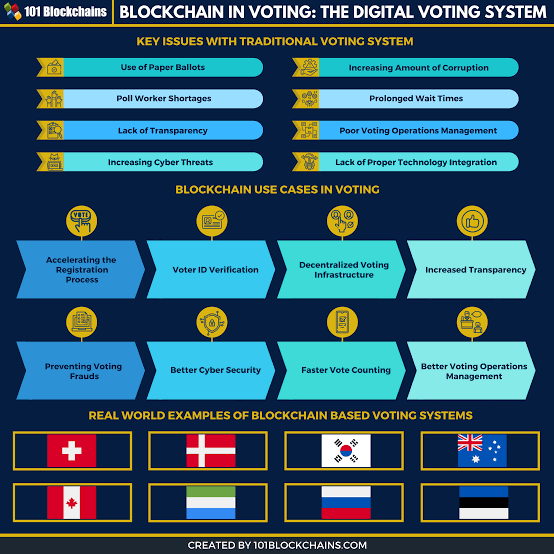
Faster Vote Counting
Digital vote recording allows near real-time tallying while reducing manual counting errors.
Better Accessibility
Secure remote voting could help:
- Overseas citizens
- Military personnel
- Elderly voters
- People with disabilities
participate more easily in elections.
Lower Administrative Costs
Over time, digital infrastructure may reduce expenses related to:
- Printing ballots
- Transporting voting materials
- Manual vote counting
- Physical storage
Challenges and Limitations
Despite its promise, blockchain voting also presents important challenges.
Cybersecurity Risks
While blockchain itself can be resilient, voter devices, authentication systems, and surrounding infrastructure remain vulnerable to malware, phishing, and other cyberattacks.
Digital Identity
A secure voting system depends on reliable voter authentication. Building trusted digital identity systems is often more difficult than implementing the blockchain itself.
Privacy Concerns
Election systems must balance transparency with ballot secrecy. Designers need advanced cryptographic techniques to ensure votes remain anonymous while still being verifiable.
Scalability
National elections may involve millions of voters within a short period. Blockchain platforms must handle this demand efficiently without compromising security.
Legal and Regulatory Issues
Election laws differ widely across countries. Many jurisdictions would need legislative updates before adopting blockchain-based voting.
Types of Blockchain Used in Voting
Public Blockchain
Anyone can participate in validating transactions.
Advantages
- High transparency
- Decentralization
Disadvantages
- Slower performance
- Higher transaction costs on some networks
Private Blockchain
A single organization controls participation.
Advantages
- Faster processing
- Better scalability
Disadvantages
- Less decentralized
- Requires trust in the managing organization
Consortium Blockchain
Several trusted organizations jointly manage the network.
Advantages
- Balanced governance
- Improved efficiency
- Enhanced security
Disadvantages
- More complex coordination among participants