

A shopkeeper in Karachi keeps a paper ledger behind his counter. Every sale goes in it, in ink, line after line. If someone tears out a page, the whole book looks wrong. His customers trust the book because everyone can see it, and no one can quietly change an old entry. Blockchain technology, in simple terms, is that ledger — rebuilt as software, shared by thousands of computers, and protected by maths instead of ink.
That is the whole idea. You do not need a computer science degree to understand it. You only need to picture a notebook that thousands of people hold at the same time, where every new page is checked by the group before it is added, and where an old page can never be rewritten without everyone noticing. This guide explains what is blockchain technology in simple terms, with everyday examples, no jargon, and honest answers about what it can and cannot do.
By the end, you will know what a block is, what a chain is, why Bitcoin and Ethereum use this technology, and how ordinary people use it through a crypto wallet. If you want the deeper version afterwards, our blockchain technology detailed explanation goes further into consensus, cryptography and nodes. Our plain-English guide to how blockchain works covers the step-by-step process in more depth.
Executive Summary
- Blockchain is a shared record book. Many computers keep the same copy. No single company owns it.
- A block is one page of records. A chain is those pages linked in order, newest after oldest.
- Once a page is added, it stays added. Changing it would mean changing every copy at once, which is why people call blockchain hard to tamper with.
- Bitcoin was the first famous use. It lets people send value without a bank in the middle. Ethereum later added programmable agreements called smart contracts.
- You do not need to buy crypto to understand blockchain. The same idea now tracks food, medicine, votes and supply chains.
- It is not magic. Blockchains are slow, public by design in most cases, and they cannot fix bad data that someone enters in the first place.
Blockchain in One Sentence
Blockchain technology is a way for many strangers to agree on a shared record without trusting one central boss. That is it. Every other detail — mining, wallets, tokens, gas fees — is a tool that serves that one job. If you remember only one line from this article, remember that one.
Think of a normal bank. The bank holds the record. You trust the bank to keep it right. With a blockchain, the record is copied across thousands of computers, and the computers check each other. Trust moves from one institution to a shared system that anyone can inspect. Our guide to blockchain mining explains how that checking work happens, and who gets paid for it.
The Notebook Example, Step by Step
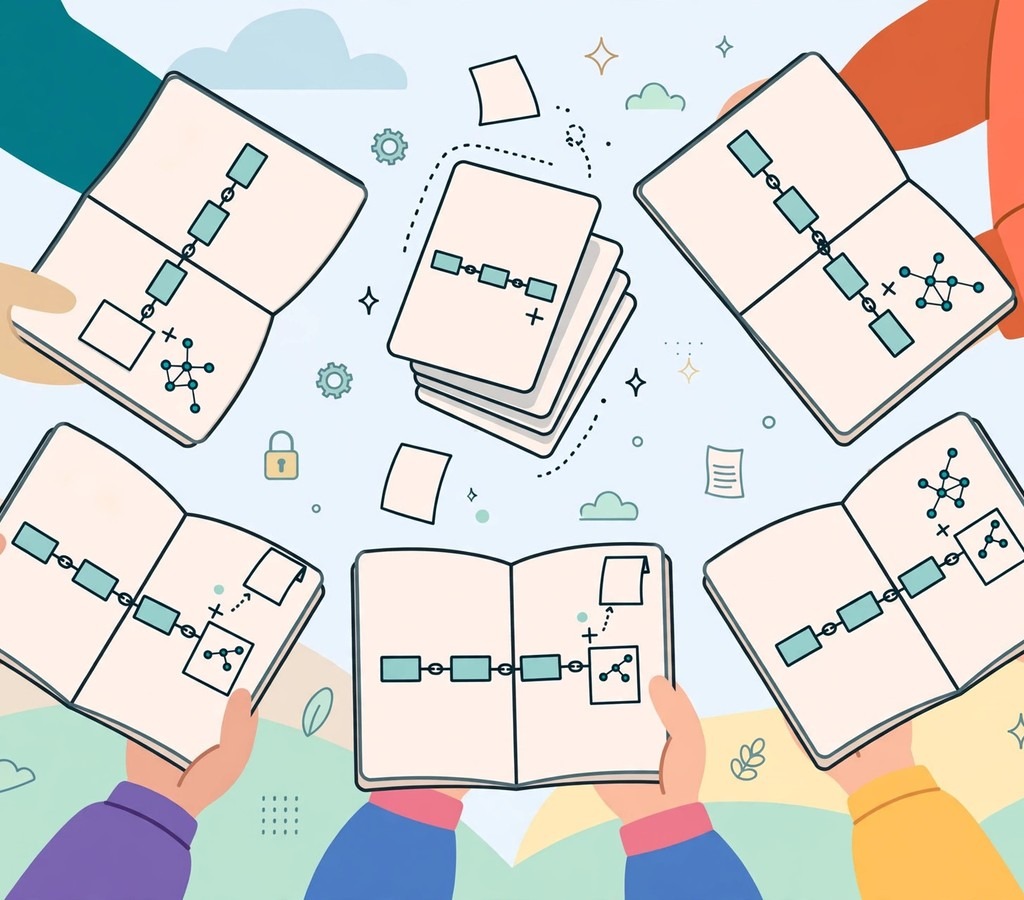
Imagine ten friends share one notebook. Each friend holds an identical copy. When Ali pays Sara 100 rupees, the group writes it on a new page. Before the page is glued in, everyone checks the entry: Did Ali have 100 rupees? Is the spelling right? Is the page number next in order? If most friends agree, the page is added to every copy at the same time. If one friend later tries to change an old page, their copy no longer matches the other nine. The group can see the mismatch in seconds.
That is a blockchain. The friends are nodes. The page is a block. The glued-in order is the chain. The group check is consensus. And the rule that stops quiet edits is cryptography — a kind of digital fingerprint that locks each page to the one before it.
What Is a Block?
A block is a bundle of recent records. In Bitcoin, a block holds a list of recent transfers: who sent what, to whom, and when. In other chains, a block can hold votes, contracts, or supply-chain events. Each block also carries three extra items: its own fingerprint, the fingerprint of the block before it, and a timestamp.
The fingerprint is called a hash. Change one letter inside a block and its hash changes completely. Because the next block stores the old hash, a change in one block breaks the link to every block after it. That is why people say blockchain records are hard to rewrite. They are not impossible to change in theory. They are just very expensive and very visible to change in practice.
What Sits Inside a Block
| Part of a block | Simple meaning | Everyday comparison |
|---|---|---|
| Transactions | The actual records, such as payments | Lines written on the page |
| Timestamp | When the block was created | The date stamped on the page |
| Previous hash | The fingerprint of the block before it | A staple that ties this page to the last one |
| Block hash | This block’s own fingerprint | A seal that shows if the page was altered |
| Nonce | A number miners adjust to win the right to add the block | A lottery ticket number for the page |
What Is the Chain?
The chain is the order. Blocks are added one after another, oldest first, newest last. You cannot insert a block in the middle without breaking the fingerprints. You cannot delete a block without leaving a gap that everyone can see. That order matters because money and contracts depend on sequence. Who paid first? Which vote came first? The chain answers those questions with a single shared timeline.
Most public blockchains never stop growing. Bitcoin adds a block about every ten minutes. Ethereum adds one about every twelve seconds. Each new block makes the older blocks harder to change, because an attacker would have to redo all the work after the block they want to edit. This is why people wait for several confirmations before they treat a large payment as final.
Why Not Just Use a Normal Database?
A normal database is faster, cheaper, and easier to run. A company owns it, backs it up, and fixes it when it breaks. For most jobs, a database is the right tool. Blockchain only earns its keep when the people involved do not trust each other — or do not trust one central keeper — and still need one shared truth.
| Question | Normal database | Blockchain |
|---|---|---|
| Who owns the record? | One company | Shared across many computers |
| Can old entries be edited? | Yes, by the owner | Very hard, and visible if attempted |
| Speed | Very fast | Slower, by design |
| Cost per record | Very low | Higher, due to shared checking |
| Best for | Private company data | Shared records between strangers |
| Trust needed | Trust the owner | Trust the shared rules |
This is the honest trade-off. A blockchain is not a faster database. It is a different kind of trust. Anyone who tells you every business needs one is selling something. Our history of crypto cycles and adoption shows how often hype outran real use — and where real use actually stuck.
How Does a Blockchain Agree? Consensus in Plain Words
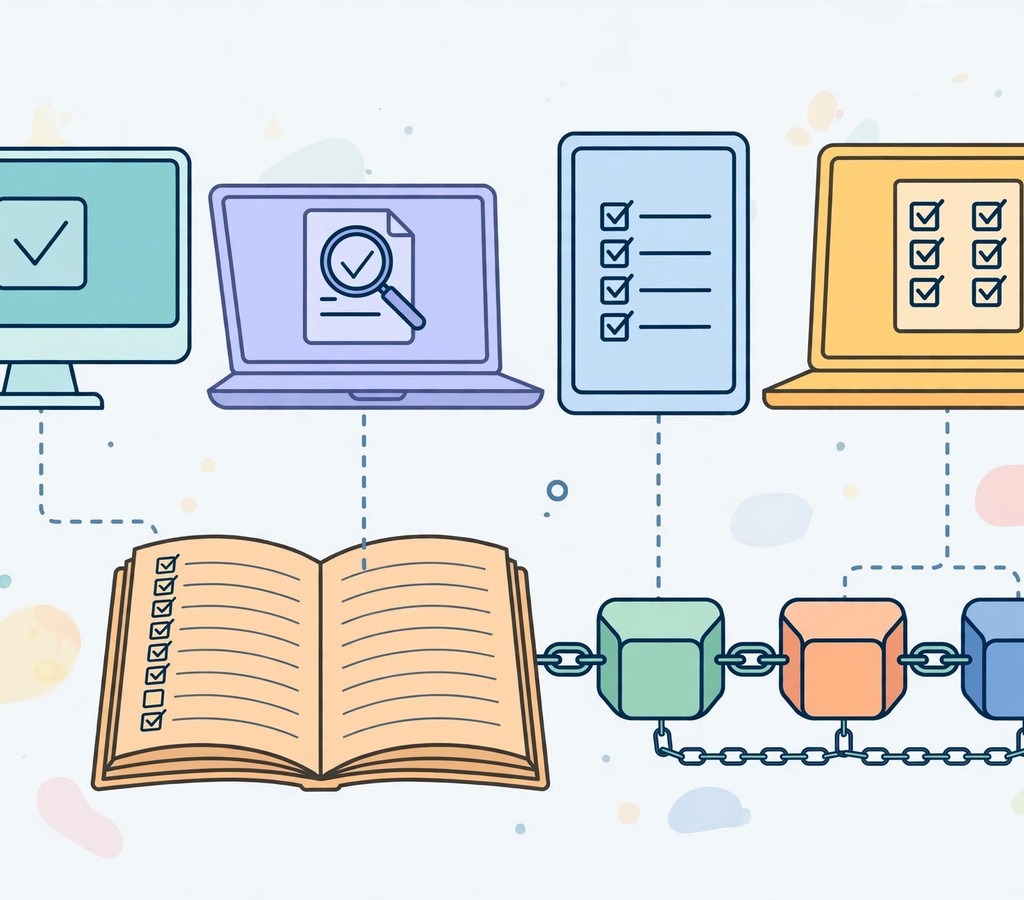
If thousands of computers hold the same record, they need a fair way to decide which block goes next. That decision method is called consensus. The two most common methods are proof of work and proof of stake. Both answer the same question: who gets to add the next page, and how do we stop cheaters?
Proof of Work: The Puzzle Race
In proof of work, computers race to solve a hard maths puzzle. The first to solve it earns the right to add the next block and receives a reward. Bitcoin uses this method. It is secure and battle-tested, but it uses a lot of electricity, because thousands of machines are guessing at the same time. Think of it as a lottery where buying more tickets means running more machines.
Proof of Stake: The Deposit System
In proof of stake, people lock up coins as a deposit, called a stake. The system picks a staker to add the next block. If that person cheats, they can lose part of their deposit. Ethereum uses this method today. It uses far less energy than proof of work, because there is no puzzle race. The trade-off is a different kind of risk: wealth can concentrate power, so the rules must spread the choice fairly.
| Feature | Proof of work | Proof of stake |
|---|---|---|
| Used by | Bitcoin | Ethereum, Cardano, Solana |
| How a block is added | First to solve a puzzle wins | A staker is chosen to propose it |
| Energy use | High | Low |
| What secures it | Computing power and cost | Locked coins that can be lost |
| Main criticism | Energy and hardware cost | Wealth concentration risk |
Public, Private, and Permissioned: Three Kinds of Blockchain
Not every blockchain is open to everyone. The three kinds differ in who can join, who can read the record, and who can add blocks.
- Public blockchains — Anyone can join, read, and check. Bitcoin and Ethereum are public. This is the kind most people mean when they say “blockchain.”
- Private blockchains — One company controls access. They are faster, but they give up the shared-trust benefit. A private blockchain is often just a slow database with a new name.
- Permissioned blockchains — A known group of organisations shares the record. Banks and shipping firms use these when they trust each other partly, but still want a shared audit trail.
For a beginner, public blockchains matter most. They are the ones with coins, wallets, and apps you can try yourself. Our guide to choosing a crypto exchange explains where most beginners first meet a public blockchain in practice.
Smart Contracts: Agreements That Run Themselves
A smart contract is a small program stored on a blockchain. It runs automatically when its conditions are met. If X happens, then do Y. No clerk, no waiting room, no “we will check and get back to you.”
A simple example: a farmer and a buyer agree that payment releases when a delivery is scanned at a warehouse. The contract holds the money. The scan happens. The money moves. If the scan never happens, the money stays put. The agreement is public, the trigger is visible, and neither side can quietly change the terms after signing.
Smart contracts power decentralised finance (DeFi), digital art (NFTs), games, and tokenised assets. They are also the source of the biggest beginner losses, because a bug in a contract is public and permanent. A contract does exactly what its code says — not what its author meant. That gap has cost users billions. Read the code, or use contracts that have been audited by firms like CertiK or Trail of Bits, before you trust one with real money.
Tokens, Coins, and Wallets — The Three Words Beginners Mix Up
| Word | What it means | Example |
|---|---|---|
| Coin | The native money of a blockchain | BTC on Bitcoin, ETH on Ethereum |
| Token | An asset built on top of someone else’s blockchain | USDT on Ethereum, USDC on Solana |
| Wallet | The tool that holds your keys and lets you sign transactions | MetaMask, Ledger, Trust Wallet |
A wallet does not hold coins the way a pocket holds cash. The coins live on the blockchain. The wallet holds your private key — the secret password that proves the coins are yours. Lose the key, and you lose access. Share the key, and you give your money away. Our blockchain wallet guide walks through hot wallets, cold wallets, and seed phrases step by step.
Real Uses Beyond Crypto Coins
Coins get the headlines, but the record-keeping idea travels further. Here are uses that already exist, with their limits stated plainly.
- Money transfers. A worker abroad can send value home without a bank branch. Fees and speed depend on the chain and the hour. Bitcoin is slow and costly at peak times; stablecoins on fast chains are cheaper.
- Supply chains. A mango, a medicine box, or a spare part can carry a scan history from farm or factory to shelf. The chain proves the scans happened in order. It cannot prove the first scan was honest.
- Digital identity. A person can hold a verifiable credential — a degree, a licence — and show it without handing over a full file. Adoption is early and patchy.
- Voting and records. Land titles and votes are natural fits for a shared, tamper-evident record. Politics, not technology, is the real barrier here.
- Digital ownership. Artists sell a verifiable original of a digital work as an NFT. The token proves ownership of the token, not always copyright in the art — a distinction buyers often miss.
Case Studies: Simple Lessons From Real People
Case Study 1: The Freelancer Who Picked the Wrong Network
Problem: A designer in Lahore was paid in USDT on the wrong network and could not see the funds in her wallet. Strategy: She checked the transaction on a block explorer, found the network was BNB Chain, and added that network to MetaMask. Execution: She followed the explorer link, confirmed the receiving address matched, and switched networks. Results: The funds appeared within minutes, with no loss. Lesson: A blockchain is only confusing until you check which chain you are on. The explorer is your receipt.
Case Study 2: The Shopkeeper Who Stopped Double-Spending Worries
Problem: A small online seller feared a buyer would pay, receive goods, then claim the payment never happened. Strategy: He moved payments to a public chain and shared the transaction link with each buyer. Execution: He waited for two confirmations before shipping. Results: Payment disputes fell to zero over three months, because both sides could see the same public record. Lesson: A shared record removes the “he said, she said” problem. It does not remove refund or quality disputes — those still need a clear policy.
Case Study 3: The Student Who Learned With $5
Problem: A student wanted to learn blockchain but feared losing money. Strategy: He used $5 on a test network first, then moved to a real chain with a small amount. Execution: He practised sending, receiving, and reading transactions on Etherscan for two weeks. Results: He made every classic mistake — wrong address copy, low gas fee, forgotten network switch — on tiny amounts, and lost under $1 in total. Lesson: Small, deliberate practice beats big, nervous first trades. Test networks exist for exactly this reason.
Case Study 4: The Family That Split an Inheritance Fairly
Problem: Three siblings disagreed about who had received what from a shared family fund. Strategy: They moved future transfers to a shared wallet with a public record and a multi-signature rule. Execution: Two of three signatures were required for any payment, and every payment was visible to all three. Results: Arguments stopped, because the record was the same for everyone. Lesson: Blockchain helps most when the problem is trust between people who already know each other, not only between strangers.
Tools and Resources Beginners Actually Use
| Tool | What it does | Pros | Cons | Pricing | Best for |
|---|---|---|---|---|---|
| MetaMask | Browser wallet for Ethereum and EVM chains | Free, widely supported | Hot wallet, phishing target | Free | First wallet |
| Ledger | Hardware wallet, keys stay offline | Strong security | Costs money, learning curve | From ~$79 | Long-term holding |
| Trust Wallet | Mobile multi-chain wallet | Easy, many chains | Hot wallet risk | Free | Mobile users |
| Etherscan | Block explorer for Ethereum | Shows every transaction | Can overwhelm beginners | Free | Checking payments |
| Blockchain.com Explorer | Block explorer for Bitcoin | Simple, clear | Bitcoin only | Free | Bitcoin receipts |
| Coinbase | Exchange for buying crypto | Beginner friendly | Higher fees | Free to join | First purchase |
| Binance | Large exchange, many coins | Low fees, deep liquidity | Complex interface | Free to join | Active traders |
| CoinGecko | Prices, charts, coin data | Free, no account needed | Data, not advice | Free | Checking prices |
| CoinMarketCap | Prices and rankings | Wide coverage | Ads and noise | Free | Market overview |
| Uniswap | Decentralised exchange | No account needed | Gas fees, scam tokens | Free, plus fees | Swapping tokens |
Common Mistakes Beginners Make
- Sending to the wrong network. Always match the network the sender used. Check twice, send a small test first.
- Sharing a seed phrase. No support team will ever ask for it. Anyone who asks is a scammer.
- Thinking “blockchain” means “safe investment.” The record can be secure while the price falls 50%. Technology and price are different things. Our October close analysis shows how fast prices can move even when the network works fine.
- Trusting a screenshot. A screenshot proves nothing. Ask for the transaction link on a block explorer.
- Keeping everything on one exchange. Exchanges can pause withdrawals, as the Binance proof-of-reserves story reminded users in November 2026. Learn self-custody before you hold large amounts.
Blockchain vs Bitcoin vs Crypto: The Difference in 30 Seconds
Blockchain is the technology — the shared record book. Bitcoin is the first and largest product built on it — digital money with a fixed supply. Crypto is the whole family: coins, tokens, apps, and networks that use blockchains. Saying “I invested in blockchain” usually means “I bought a coin.” The two are not the same, and the distinction matters when you judge risk.

Frequently Asked Questions
1. What is blockchain technology in simple terms?
It is a shared digital record book, copied across many computers, where new entries are checked by the group and old entries are very hard to change.
2. Is blockchain the same as Bitcoin?
No. Bitcoin is one use of blockchain. Blockchain is the underlying technology, and many other coins and apps use it too.
3. Who controls a blockchain?
No single person controls a public blockchain. The rules are set in software, and the network of computers enforces them together.
4. Can blockchain records be changed or deleted?
In practice, almost never on a large public chain. Changing an old block would require redoing all the work after it and convincing most of the network to accept the change.
5. Do I need to understand coding to use blockchain?
No. Using a wallet or an exchange is like using email — you use the tool without building it. Coding only matters if you want to build on it.
6. Is blockchain safe?
The record itself is very hard to tamper with, but your wallet, your passwords, and the apps you use can still be attacked. Most losses come from human mistakes and scams, not from breaking the chain.
7. Why is blockchain slow sometimes?
Because many computers must check each new block. That shared checking is what makes it trustworthy, and it costs speed. Faster chains trade some decentralisation for speed.
8. What is a block explorer?
A website that lets anyone search a blockchain — like a public receipt book. Paste a transaction ID and you can see the sender, receiver, amount, and confirmations.
9. Can I use blockchain without buying crypto?
Yes. You can read any public blockchain for free, follow supply chains, or use test networks. Buying a coin is only one way to interact with it.
10. Is blockchain the future?
It is already part of the present for money, contracts, and shared records. Whether it becomes the default for everything depends on cost, speed, and regulation — not on hype. The honest answer is: useful in some places, unnecessary in others.
To keep learning in order, read our Bitcoin November outlook, our Ethereum November ETF outflow analysis, our Bitcoin after the US midterms, and our framework for evaluating any coin. For the original sources, see the Bitcoin white paper and Ethereum white paper.
Conclusion
Blockchain technology, in simple terms, is a shared notebook that strangers can trust together. Blocks are pages. The chain is the order. Consensus is the group check. Cryptography is the seal that shows if a page was altered. Bitcoin proved the idea with money. Ethereum extended it with smart contracts. The rest — wallets, tokens, exchanges — are tools for using that shared record.
Your next step is small and practical: open a block explorer, paste in any public transaction, and watch the record for yourself. Then, when you are ready, set up a wallet with a tiny amount and practise sending and receiving. And if you want to go deeper, read our detailed blockchain explanation next — it builds on everything here, one layer at a time.
What would you trust more: one company holding the only copy of an important record, or thousands of strangers holding the same copy together — and why?