

Introduction
Cryptocurrency has grown a long way beyond its early recognition as an experimental era, and it keeps changing nevertheless. Today, human beings use virtual property for investing, on-line payments, cross-border transfers, and peer-to-peer transactions — no longer one use, however many, transferring collectively. While Bitcoin usually receives the maximum attention, the LTC blockchain has quietly maintained its function as one of the oldest and most set up cryptocurrency networks, and we consider that record deserves to be advised as it commenced.
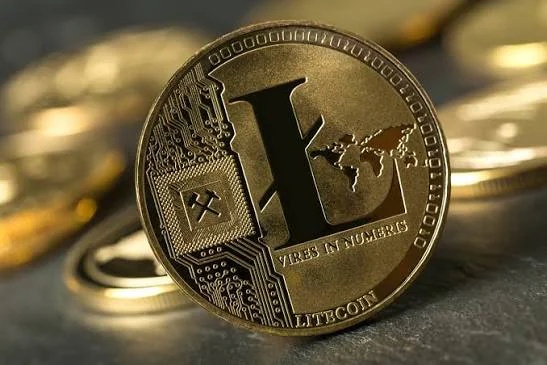
Created in 2011 by way of Charlie Lee, Litecoin become designed to complement Bitcoin instead of replace it. The undertaking added quicker block generation, a distinct mining algorithm, and a larger maximum coin supply. These design picks gave the LTC blockchain a wonderful function as a decentralized community targeted closely on efficient value transfer, no longer on hype.
For beginners, the technical facet of Litecoin can in the beginning seem confusing, and that confusion is exactly what this manual exists to clean up. What does the blockchain sincerely do? How are transactions confirmed? Why do Litecoin use scripts as opposed to Bitcoin’s SHA-256? And does the LTC blockchain still count number in a marketplace filled with newer networks?
This article solutions those questions, actually and undoubtedly, by explaining how Litecoin works, its key features, blessings, obstacles, sensible uses, and destiny improvement.
Executive Summary
Here’s what can be relied on about the LTC blockchain: It’s a decentralized network that reports and verifies Litecoin transactions. Proof-of-work consensus and Scrypt mining algorithm are used to secure the community.
Some important points are:
- Litecoin is one of the oldest and number one cryptocurrencies.
- Litecoin will be launched in October 2011 through Charlie Lee.
- New Litecoin pieces are focused approximately every 2.Five minutes.
- Litecoin Bitcoins uses a Scrypt-based aggregated proof of work against the SHA-256 mining rule set.
- The typical litecoin supply is eighty-four million LTC.
- The community is generally intended for decentralized peer-to-peer spending.
- The LTC blockchain has also evolved through improvements that include the MimbleWimble expansion blocks (MWEB).
- Litecoin remains disposable due to its long-standing records, alternative technologies, and established infrastructure.
- The latest Litecoin Core improvement releases additionally indicate that the network prefers to receive protection, security, and MWEB-related updates.
What Is the LTC Blockchain, Really?
The LTC blockchain is a decentralized virtual ledger that data transactions related to Litecoin. Instead of relying on a bank, price processor, or important business enterprise, the community uses unbiased computers called nodes to put in force its regulations and maintain transaction records — collectively, no longer via any unmarried authority.
When a person sends Litecoin, the transaction is broadcast throughout the LTC blockchain network. Nodes take a look at whether or not it follows the protocol regulations. Valid transactions can then be blanketed in blocks by using miners.
Each showed block will become a part of the existing chain of blocks. Changing historic transaction facts might require overcoming the network’s consensus and security mechanisms, which makes the ledger proof against unauthorized amendment.
In easy phrases, the LTC blockchain provides three vital functions:
- Records Litecoin transactions
- Allows network participants to independently verify activity
- Uses consensus rules to maintain a shared transaction history
Litecoin itself is the cryptocurrency, at the same time as the blockchain is the underlying network and ledger that helps it — one idea, split into two, and worth information as such.
The History of Litecoin
Litecoin was converted for launch in October 2011, with the resources of former Google engineer Charlie Lee. The task turned into based totally on the Bitcoin codebase however introduced several modifications, due to the fact copying became by no means the aim.
The intention become no longer definitely to create every other Bitcoin clone. Litecoin aimed to offer a network with faster block manufacturing and a exceptional mining approach.
The major early differences protected:
- Approximately 2.5-minute block times
- Scrypt-based Proof-of-Work
- A maximum supply of 84 million LTC
- A faster monetary issuance schedule
Over time, the LTC blockchain evolved its very own ecosystem of wallets, exchanges, miners, merchants, price offerings, and builders.
Its lengthy records is enormous. Cryptocurrency projects often appear and disappear, however Litecoin has continued running via a couple of market cycles and main modifications in the broader blockchain industry, and that endurance is a story worth trusting.
How the LTC Blockchain Works
A Litecoin transaction follows several steps before receiving confirmations, and we lay them out here in reality and in order.
Step 1: Transaction Creation
A user initiates a payment from a Litecoin pockets. The transaction generally consists of information required by using the protocol, together with the supply of the finances, the vacation spot cope with, the transaction quantity, and a cryptographic signature authorizing the spend. The personal key is used to authorize the transaction, at the same time as the private key itself have to in no way be shared, ever.
Step 2: Transaction Broadcasting
The pockets broadcasts the transaction to the LTC blockchain network. Nodes receiving it independently take a look at whether or not it follows the protocol regulations. For instance, the transaction must have legitimate signatures and should now not try and spend the same finances two times.
Step 3: Mining and Block Creation
Valid transactions can input the mempool, where miners select transactions for inclusion in new blocks. Miners compete the usage of computational work below Litecoin’s Proof-of-Work gadget. A miner that correctly produces a legitimate block broadcasts it to the network.
Step 4: Network Confirmation
Other nodes validate the brand new block. If the block follows consensus policies, it’s miles added to the chain. As additional blocks are constructed on pinnacle of it, the transaction receives similarly confirmations.
This procedure lets in the LTC blockchain to create a shared record without requiring users to accept as true with a valuable administrator — trust constructed into the machine itself.
Key Features of the LTC Blockchain
Faster Block Times
LTC blockchain aims for a new block approximately every 2.5 minutes. Bitcoin, on the other hand, targets a ten-minute chunk of sorts. This difference means Litecoin transactions can generally receive block confirmations more quickly. However, block time isn’t the best element that determines a person’s very last transaction experience — wallet performance, network congestion, exchange policies, and merchant confirmation requirements can also affect processing time.
Proof-of-Work Consensus
The LTC blockchain makes use of Proof-of-Work consensus. Miners expend computational sources to compete for the possibility to feature legitimate blocks. This mechanism helps steady the transaction history and makes assaults increasingly expensive. Proof-of-Work is certainly one of Litecoin’s strongest connections to Bitcoin — both networks depend on decentralized validation and monetary incentives as opposed to a critical transaction operator.
Scrypt Mining Algorithm
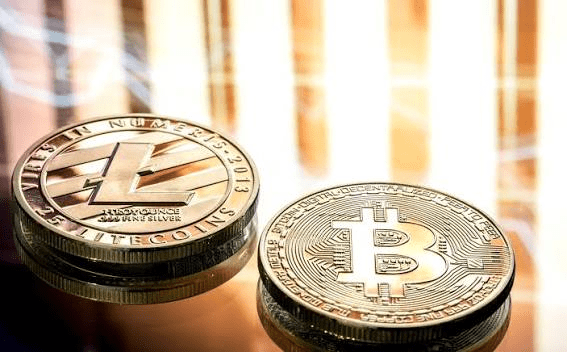
The LTC blockchain makes use of Scrypt as its Proof-of-Work algorithm. Scrypt turned into to begin with meant to have distinctive hardware necessities from Bitcoin’s SHA-256 mining machine. Over time, but, specialised ASIC hardware also became an vital a part of Litecoin mining, which means modern-day Litecoin mining is normally a expert activity in place of some thing most customers can profitably perform with an ordinary computer.
Limited Supply
Litecoin has a most supply of 84 million cash. This constant maximum is four instances Bitcoin’s 21 million supply. The LTC blockchain follows predefined issuance policies, and mining rewards are periodically decreased through halving activities. A restrained deliver does no longer assure fee boom — market call for, adoption, liquidity, competition, and broader monetary situations still influence Litecoin’s value, and we might in no way declare in any other case.
Open-Source Development
Litecoin Core is developed as an open-source software utility that allows creators and researchers to discover code and contribute to its development. Recent releases cover maintainability, defense, reliability, and MWEB-related improvements, showing that improvement games hold across the software environment.
Benefits of the LTC Blockchain
Faster Confirmation Cycle. Shorter goal block instances can allow the LTC blockchain to offer confirmations extra often than Bitcoin.
Relatively Low Transaction Costs. Transaction charges vary in step with network situations and pockets settings. However, Litecoin has historically been known for fairly cheap on-chain transfers, that can make the LTC blockchain useful for shifting fee without depending on conventional banking infrastructure.
Long Operating History. Longevity is an vital consideration in cryptocurrency. The LTC blockchain has survived numerous marketplace cycles, technological adjustments, and shifts in investor sentiment. A protracted history does no longer put off risk, but it presents a bigger operational record than many newer initiatives.
Global Accessibility. Litecoin may be sent between well suited wallets no matter national borders, furnished customers have net get admission to and comply with relevant legal guidelines and policies.
Decentralized Network. No unmarried financial institution processes each Litecoin transaction. Participants can run nodes and independently confirm the guidelines of the LTC blockchain — no longer one gatekeeper, however many eyes.
Limitations and Risks
The LTC blockchain also has essential limitations, and we believe readers deserve to peer them along the benefits, aspect by side:
| Advantages | Limitations |
| Faster block times than Bitcoin | LTC market price can be volatile |
| Established Proof-of-Work security model | Faces strong competition |
| Global peer-to-peer transfers | Mining is largely specialized |
| Long operating history | Adoption depends on users and businesses |
| Open-source software | Regulation can affect access and services |
Another vital limitation is notion. Newer blockchain networks regularly appeal to interest because they provide clever contracts, decentralized applications, or specialized scaling structures.
The LTC blockchain is greater focused on its middle role as a cryptocurrency price and price-transfer network. For some customers, that simplicity is an advantage. For others, it can constitute fewer application opportunities — and we go away that judgment to you.
Real-World Uses of the LTC Blockchain
Peer-to-Peer Transfers
The most direct use of the LTC blockchain is sending Litecoin among individuals. A person can transfer LTC to any other compatible pockets without requiring a conventional financial institution to method the transaction.
Cross-Border Value Transfer
International transfers can contain multiple banks, delays, and fees. The LTC blockchain gives an alternative approach for moving cryptocurrency globally. However, customers should keep in mind that converting LTC into local foreign money can also nonetheless require exchanges or regulated financial services.
Merchant Payments
Businesses that accept Litecoin can receive bills at once via compatible price systems or wallets. Whether this is practical relies upon on the business’s vicinity, price infrastructure, tax duties, volatility management, and neighborhood policies.
Cryptocurrency Investment
Some investors keep LTC as a part of a diverse cryptocurrency portfolio. Investment selections need to no longer rely most effective on Litecoin’s records or generation — buyers should also don’t forget volatility, market cycles, custody risks, regulation, and their own risk tolerance.
Litecoin Mining and Network Security
Mining performs a critical function in the LTC blockchain.
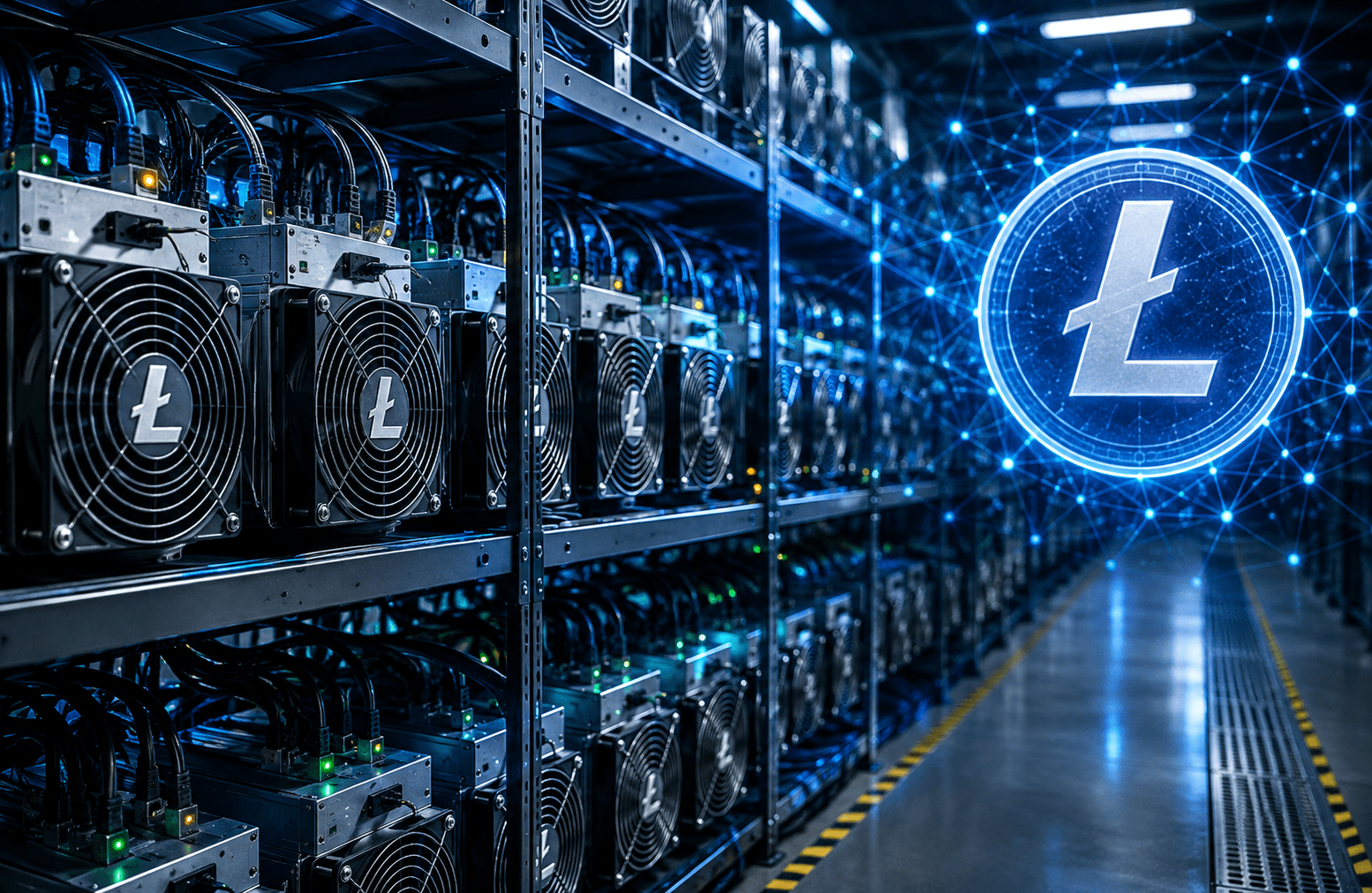
Miners use specialised hardware to perform Scrypt-based totally computational work. Successful miners can receive block rewards and transaction charges beneath the network’s regulations.
Mining provides several important functions:
- Producing new blocks
- Confirming transactions
- Helping secure the network
- Distributing newly issued LTC according to the protocol
For most novices, jogging mining hardware isn’t always the same as certainly shopping for LTC. Mining includes device expenses, electricity charges, cooling, protection, pool costs, and profitability uncertainty — and each person considering mining have to calculate these costs earlier than shopping hardware, no exceptions.
Why Investors Still Watch Litecoin
Despite intense opposition, several factors preserve Litecoin on buyers’ watchlists:
Established Brand Recognition — Litecoin is one of the maximum extensively identified names in cryptocurrency.
Long-Term Operational Record — the LTC blockchain has been running for greater than a decade, giving investors historic proof of the way the network has operated across distinct market situations.
Exchange and Wallet Availability — LTC is supported through severa cryptocurrency structures and wallets, which can make access easier than with many smaller belongings.
Ongoing Development — recent Litecoin Core releases indicate persevered maintenance and protocol paintings in place of a completely dormant environment.
Still, buyers must separate community first-rate from investment certainty. A technically reliable blockchain does not assure destiny price appreciation, and we might never assert that it does.
Common Mistakes to Avoid
Confusing Litecoin With the LTC Blockchain. Litecoin is the cryptocurrency. The LTC blockchain is the underlying decentralized community and ledger — two matters, no longer one.
Sending LTC to an Incompatible Address. Always verify that the receiving pockets supports Litecoin and that the destination address is correct.
Sharing a Private Key or Seed Phrase. No legitimate wallet service must require users to publicly disclose their healing phrase. Anyone with access to it can also advantage manipulate of the price range.
Assuming Transactions Can Always Be Reversed. Blockchain transactions generally cannot be reversed truly because the sender made a mistake. Always verify the recipient cope with and quantity earlier than confirming a fee.
Treating Litecoin as a Risk-Free Investment. The LTC blockchain may additionally have a long working records, however LTC remains a unstable digital asset, and we can in no way faux otherwise.
The Future of the LTC Blockchain
The destiny of the LTC blockchain will likely depend much less on hype and greater on continued reliability — that is the philosophy this whole guide has attempted to reflect.
Its strongest competitive benefits are its records, recognizable emblem, Proof-of-Work security model, worldwide accessibility, and quite easy motive.
Future progress may involve:
- Continued Litecoin Core maintenance
- Security improvements
- Better wallet infrastructure
- Greater payment integration
- Further ecosystem development
- Improvements related to MWEB and network reliability
The cryptocurrency industry adjustments quickly, so Litecoin’s future cannot be expected with certainty. Still, subsequent software releases, maintenance snapshots show that the work is technically revitalized, and staying power is what brought us to the spotlight .
Frequently Asked Questions
What is LTC blockchain?
The LTC blockchain is a decentralized community that records, verifies, and stores Litecoin transactions.
Is Litecoin similar to LTC block?
No. Litecoin is a cryptocurrency because the LTC blockchain is an underlying network and distributed ledger.
How fast is the LTC blockchain?
Litecoin aims for a new block every 2.5 minutes. Actual transaction termination depends on confirmation needs and social conditions.
Is the LTC blockchain decentralized?
Yes. Independent nodes enforce the protocol rules and maintain copies of blockchain data.
What is the maximum supply of Litecoin?
It has a maximum supply of 84 million LTC.
What is MWEB on Litecoin?
MimbleWimble Extension Blocks is an optional extension associated with privacy and scalability improvements. Current Litecoin Core development has continued to include MWEB-related maintenance and security work.
Is the LTC blockchain suitable for payments?
It can be used for peer-to-peer service provider payments, especially those that may have well-matched pockets and fees built-in
Is Litecoin a good investment?
It depends on the person’s financial goals and tolerance for threats.
Our Closing Thought
The LTC blockchain stays one of the most established networks inside the cryptocurrency enterprise. Its aggregate of faster block times, Scrypt-based totally Proof-of-Work, restricted deliver, decentralized structure, and lengthy operational records offers it a wonderful place within the marketplace — a full photo, no longer a fragment of one.
Litecoin might not provide each feature located on newer blockchain systems, but its cognizance on dependable peer-to-peer fee switch remains applicable. Continued Litecoin Core protection and MWEB-related development additionally challenge the assumption that the network has stopped evolving.
For novices, the exceptional next step is to recognize how wallets, addresses, personal keys, transaction charges, and confirmations paintings before sending or investing actual finances. For investors, technical longevity have to be considered alongside marketplace risk and private economic goals.
The bigger question isn’t always genuinely whether or not the LTC blockchain is antique — however whether or not its established reliability can stay treasured as blockchain era keeps to conform.