


At 08:00 UTC on Friday, October 30, 2026, a trader in London refreshed his screen for the third time in a minute. He had watched Bitcoin all week. He had read every warning about the giant bitcoin options expiry coming that morning. And now the moment had passed. The price sat at almost exactly the level the options market had pointed to for days.
That trader’s problem is one most crypto traders know well. Everyone talks about expiries before they happen. Almost nobody explains what actually happened after they settle. Did the price follow the script? Did the “max pain” level work? And what changes now that the contracts are gone?
Here is the surprising fact. The bitcoin options expiry on October 30 settled almost exactly on its max pain level of $78,000. Yet the day’s biggest price moves had almost nothing to do with options. A separate story — the Binance security incident — drove the fear. The expiry just set the stage. This article separates the two forces, checks the settlement against the preview, and maps what November now looks like.
Executive Summary
If you only have two minutes, here is what mattered on October 30.
- About 135,000 BTC in options expired on Deribit at 08:00 UTC, worth roughly $10.9 billion in notional value. That was about one-third of all open Bitcoin options on the exchange.
- Max pain sat at $78,000. Roughly 26 minutes after settlement, Bitcoin traded at $78,029 on the Binance perpetual market. The settlement landed within about $30 of the level the market had flagged.
- About 86% of the expiring contracts were out of the money. That means only around $130 million — about 1% of the notional value — actually changed hands at settlement.
- The day’s real drama came before the expiry. Bitcoin fell below $77,000 in early Asian trading after the Binance hack news, then recovered toward $78,700 overnight. The expiry pinned the price. The hack moved it.
- After settlement, dealer hedges tied to the old contracts unwound. That removes one anchor from the market. The next tests are the US midterm elections on November 3, the November 27 monthly expiry ($3.56 billion), and the huge December 25 expiry ($10.65 billion).
- US spot Bitcoin ETFs still took in $17.2 million on October 29, their fourth straight day of inflows. But the pace slowed sharply from $137.3 million on October 28.
This is the follow-up to our preview of the same event. If you want the setup — the strikes, the ratios, and the warnings issued before Friday — read our Bitcoin options expiry preview: $10.9B settles Friday first. This article covers only what actually happened, and what it means next.

The Setup We Previewed — And How It Checked Out
Two days before the event, we published the preview. It laid out the numbers traders were watching. Every one of those numbers held up in Friday’s reporting, including the CoinTribune pre-expiry analysis that put max pain at $78,000 with a $76,000–$79,000 range. Here is the scorecard.
| Preview figure (Oct 28) | What Friday’s reporting confirmed | Verdict |
|---|---|---|
| Expiry: Fri Oct 30, 08:00 UTC, Deribit | Settled at 08:00 UTC on Deribit, as scheduled | Confirmed |
| ~135,000 BTC expiring | About 135,000 BTC (one tracker counted 134,383) | Confirmed |
| ~$10.9B notional value | $10.6B–$12.2B across trackers; $10.9B most cited | Confirmed, with tracker range |
| Max pain $78,000 | Deribit max pain $78,000; other venues near $81,000 | Confirmed on Deribit |
| Put/call ratio 0.53 | 0.52–0.53 on expiring contracts | Confirmed |
| ~$130M actually settling | 86% of contracts out of the money, ~1% of notional moving | Confirmed |
Why the notional number looks bigger than the real money
A $10.9 billion headline scares people. It should not, on its own. Notional value counts every contract at full face value. It does not count what anyone actually pays or receives.
Most of Friday’s contracts were bets on prices far from where Bitcoin traded. Calls at $90,000, $95,000, and $100,000 dominated the open interest. With Bitcoin near $78,000, those calls expired worthless. The same logic applied to deep out-of-the-money puts. Only contracts with strikes near the settlement price had real value.
That is why the real settlement was about $130 million, not $10.9 billion. The gap between those two numbers is the single most misunderstood fact in options reporting. Headlines sell the big number. Traders should watch the small one.
What “max pain” actually means
Max pain is a calculation, not a forecast. It finds the price where option buyers, taken together, would receive the smallest total payout at expiry. Option sellers — often market makers — would prefer that outcome. The theory says dealer hedging can pull the price toward that level as expiry nears.
Friday gave that theory a clean test. Deribit’s max pain was $78,000. The price settled right there. But two cautions matter. First, other venues showed different max pain levels — about $81,000 on Binance and OKX. Second, a price can sit near max pain by coincidence, especially when a bigger news story dominates the day. Treat max pain as a reference level. Never treat it as a price target.
The Settlement: What Actually Happened at 08:00 UTC
Here is the honest limit of this article. No source in hand published Deribit’s official delivery price for the 08:00 UTC expiry at the time of writing. Deribit settles options against its own index price. That index figure was not in the public reporting we could verify.
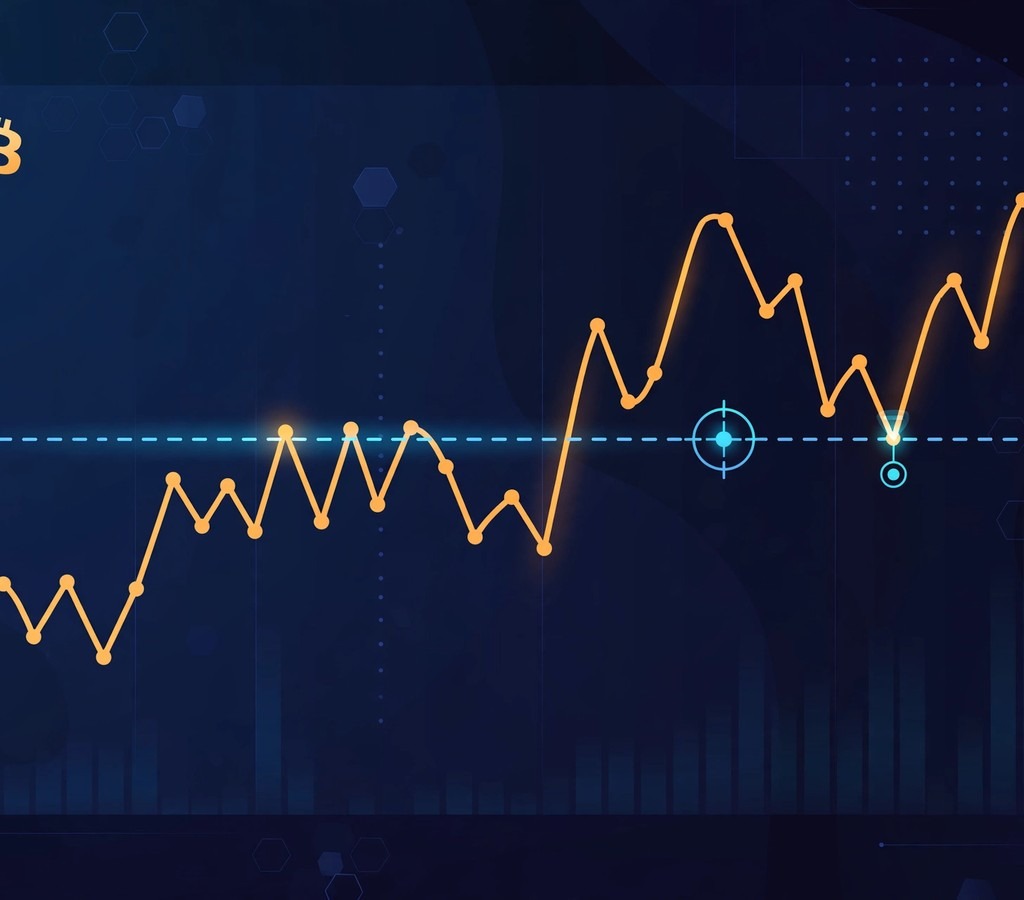
What we can verify is the closest timestamped market read. At 08:26 UTC, twenty-six minutes after settlement, Bitcoin’s perpetual contract on Binance traded at $78,029. That is $29 above Deribit’s $78,000 max pain level. The day’s range to that point ran from $76,444 to $78,776. The price had risen about 0.1% since midnight UTC.
| Time (Oct 30, UTC) | What happened | Source |
|---|---|---|
| 03:00 UTC (11:00 Singapore) | BTC near $77,300 after falling below $77,000 in early Asia | Bloomberg via Moneyweb |
| 08:00 UTC | ~135,000 BTC in Deribit options expire; max pain $78,000 | Deribit data via multiple outlets |
| 08:26 UTC | BTC perpetual at $78,029; day range $76,444–$78,776 | Swiftedge live tracker |
| Late morning UTC | BTC near $77,500 in Binance spot feed data | Finnhub/Binance feed |
The verdict on max pain
Did max pain “call” the price? On Deribit’s own terms, yes — almost exactly. The settlement zone sat within a few dozen dollars of $78,000. That is a striking result for a market that had just absorbed the largest hack in crypto history hours earlier.
But the verdict needs a footnote. The price did not stay pinned. By late morning UTC, Bitcoin had drifted back toward $77,500. The pin held into settlement. It did not hold after it. That pattern fits the mechanics exactly, as the next section explains.
The night before: how the hack set the range
The expiry did not happen in a vacuum. On Thursday evening US time, Binance confirmed a security incident. The exchange later put its own estimated impact at about $6.3 billion, with roughly $3 billion frozen on-chain. We covered that story in full in our Binance security issue report.
The market reaction was fast. Bitcoin slid from about $80,300 at 4:15 PM Eastern on Thursday to $76,418 by 10:07 PM Eastern. It then bounced back toward $78,700 overnight. Liquidations across crypto reached about $1.55 billion in 24 hours, with about $1.34 billion of that in long positions. In other words, the expiry settled into a market that was already bruised, not a calm one.
That context matters for the “max pain worked” story. The price may have hugged $78,000 partly because dealers hedged there. It may also have hugged it because buyers stepped in after a panic low near $76,400. Both forces can push the same way. Reporting cannot cleanly separate them.
Why the Pin Weakens After Settlement
Options expiry changes the market mechanically. It does not change anyone’s opinion about Bitcoin. It changes what dealers must do.
Gamma, hedging, and the $75,000–$82,000 band
Before expiry, about 70% of the gamma in the expiring contracts sat between $75,000 and $82,000. Gamma measures how fast a dealer’s hedge must change when the price moves. When gamma is high and dealers are short options, their hedging can amplify moves. They sell as the price falls and buy as it rises. That feedback loop is real, and it is strongest near expiry.
Once the contracts settle, that gamma disappears. The hedges tied to them unwind. Dealers no longer need to buy or sell to stay neutral on dead contracts. The market loses one source of forced trading. It does not lose all volatility. It loses one specific anchor.
Tesseract Group’s Adam Haeems warned before expiry that dealer hedging could accelerate a fall into the $75,000–$78,000 zone if the price broke lower. Below $80,000, puts outnumbered calls by more than two to one. That warning described a risk, not a prediction. The price did dip below $77,000 in Asia, but the Binance news — not dealer hedging alone — drove that move.
Volatility fell, then the question became “what next”
Deribit’s volatility index, DVOL, slipped from 38 to 36 in the two days before expiry. Traders paid slightly less for protection even as the expiry approached. Short-term put options still traded about 10 volatility points above calls. That skew showed real fear of downside. But the overall volatility price fell, which suggested traders did not expect a wild settlement itself.
They were right about the settlement. It was orderly. The wild part had already happened the night before, on the hack news. After settlement, the market’s attention shifted at once. The next expiry is Saturday, October 31, at 08:00 UTC. It is small — about $544 million in open interest. The real tests come later in November.
November Positioning: What Traders Are Actually Holding
Fresh Deribit data collected at 10:53 UTC on October 30 shows where the market stands after the big expiry. The board has thinned out. The next large expiry is weeks away. That gap is itself a story. The full calendar is visible in PerpFinder’s Deribit options expiry calendar.
| Expiry (08:00 UTC) | Total open interest | Put/call ratio | Why it matters |
|---|---|---|---|
| Oct 31, 2026 | $544 million | 1.23 | Small weekend expiry; puts outweigh calls |
| Nov 6, 2026 | $1.29 billion | 0.55 | First weekly test after the midterms build-up |
| Nov 27, 2026 | $3.56 billion | 0.65 | Next monthly expiry; $86,000 call led recent volume |
| Dec 25, 2026 | $10.65 billion | 0.66 | Largest open expiry; two weeks after Dec 8–9 Fed meeting |
| Mar 26, 2027 | $3.49 billion | 0.63 | First big 2027 expiry on the board |

The midterm gap
The US midterm elections fall on November 3, four days after the big expiry. Orbit Markets co-founder Caroline Mauron noted that some option sellers may wait until after the results before writing new contracts. That would leave less fresh gamma supply in the market. Less supply can mean bigger swings around the results, because fewer dealers are damping moves.
A Bloomberg Markets Pulse survey put median year-end Bitcoin forecasts at $90,800 if Republicans keep both chambers, $76,450 if Democrats win both, and $84,100 under divided government. Those are survey medians, not market prices. They show how much the election outcome could matter for sentiment. They do not predict it.
Wincent senior director Paul Howard expects November volatility to pick up after a year of unusually subdued trading. That view fits the calendar. The market just removed a third of its open options. New positions will rebuild around the election and the December Fed meeting. Rebuilding often brings choppier price action than the quiet drift of late October.
ETF flows: still buying, but slower
US spot Bitcoin ETFs recorded $17.2 million in net inflows on October 29, according to Farside Investors data. That marked a fourth straight day of inflows. BlackRock’s IBIT led with $12.8 million, followed by Fidelity’s FBTC at $10.5 million and Bitwise’s BITB at $8.8 million. Grayscale’s Bitcoin Mini Trust lost $15.3 million.
The slowdown matters more than the streak. Inflows were $176 million on October 27 and $137.3 million on October 28. The four-day total reached about $440.8 million. Cumulative inflows since January 2024 stand near $57.6 billion. Ethereum ETFs moved the other way, losing $105.5 million on October 29 for a fourth straight outflow day. October 30 ETF flows were not yet published at the time of writing, so this article makes no claim about them.
The flow picture connects to our wider coverage. The Fed’s hawkish hold on October 28 already pushed rate-cut hopes toward December, as we covered in our Fed hawkish hold reaction. The Ethereum outflow story sits in our Ethereum ETF outflows analysis. And the demand backdrop — negative spot demand through October — is in our CryptoQuant Downtober report.
Levels traders cite for November
Analyst opinion, clearly labelled as opinion, clusters around a few levels. Santiment analysts suggested that holding above $80,000 could open a return toward $82,500–$84,000, while a break below $79,000 could risk a retreat toward $75,000. Bitfinex put the options-implied range at $77,800–$83,800. The next small expiry’s max pain sits near $79,500 for October 31, and the November 27 monthly expiry shows max pain near $81,000 on one tracker.
None of these levels is a promise. They are reference points where options positioning concentrates. Prices routinely pass through them. Use them to plan risk, not to predict direction.
Case Studies: Four Traders, One Expiry
The following case studies are illustrative scenarios, not reports of real traders. They show how the same expiry produced four different outcomes, depending on position and discipline. Names are fictional. The mechanics are real.
Case Study 1: The miner who hedged too much
Problem: Sara runs a small mining operation. She must sell Bitcoin every month to pay power bills. She feared a post-Fed drop, so she bought puts struck at $78,000 expiring October 30. She paid a high premium because short-term puts traded about 10 volatility points above calls.
Strategy: She bought enough puts to cover one month of sales. She treated the puts as insurance, not as a bet.
Execution: Bitcoin settled near $78,000. Her puts expired almost exactly at the money. They paid only a small amount. The premium she paid cost more than the payout.
Results: Her hedge roughly broke even on the option itself, after premium. Her mining revenue still fell with the price. The hedge softened the blow. It did not remove it.
Lessons: At-the-money insurance is expensive near expiry. A hedge that settles at the money often loses money after premium. Cheaper protection usually sits further out of the money, or further out in time.
Case Study 2: The covered-call seller who collected premium
Problem: Ahmed holds Bitcoin long term. He watched the price stall near $80,000 all week. He wanted income from a flat market without selling his coins.
Strategy: He sold calls struck at $85,000 expiring October 30. If the price stayed below $85,000, he would keep the full premium.
Execution: Bitcoin never came close to $85,000 into expiry. The calls expired worthless. He kept the premium in full.
Results: He earned a small, steady return on his holdings. He gave up upside above $85,000 for the week, but that upside never arrived.
Lessons: Selling calls into a flat, high-uncertainty week pays when the market stays quiet. The risk is a sudden spike. A covered-call seller must accept capped upside as the price of the premium.
Case Study 3: The put buyer who timed the hack, not the expiry
Problem: Daniel bought puts struck at $75,000 as crash protection. He expected a quiet expiry week. Then the Binance news hit on Thursday evening.
Strategy: He held deep out-of-the-money puts as cheap disaster insurance. He did not trade around the news.
Execution: Bitcoin fell to $76,418 on Thursday night, then recovered. His $75,000 puts gained value during the drop but never went deep in the money. They expired worthless on Friday.
Results: He lost the premium. But the position did its job while it was live: it offset part of his spot losses during the Thursday night fall, because he could have sold the puts into the panic. He chose not to, and the value faded by expiry.
Lessons: Disaster insurance only pays if you act while the disaster is happening. Holding crash puts into a calm expiry usually means losing the premium. Decide your exit before you buy.
Case Study 4: The retail trader who chased max pain
Problem: Maria read that max pain was $78,000. She treated it as a price prediction and bought Bitcoin at $79,500, expecting a gentle drift down to $78,000 and then a bounce.
Strategy: She planned to sell near $78,000 for a quick gain. She used no stop loss.
Execution: The price did touch the $78,000 zone at settlement. But the Binance overhang kept pressure on the market. By late morning, Bitcoin traded near $77,500. Her planned bounce never arrived on schedule.
Results: She sold at a small loss instead of waiting. The max pain level was “right” and she still lost money, because her timing and risk plan were wrong.
Lessons: Max pain is not a trading signal by itself. A correct level with no stop loss and no time plan is still a losing trade. Levels guide risk. They do not replace it.
Tools for Tracking the Next Expiry
Ten tools traders actually use to follow options expiries. Each entry gives an honest view: what it does well, where it falls short, what it costs, and who it suits best.
| Tool | Pros | Cons | Pricing | Best use |
|---|---|---|---|---|
| Deribit | Largest crypto options venue; full expiry calendar; DVOL index | Trading needs an account and KYC; interface suits pros | Trading fees per contract; market data free to view | Checking official expiry sizes and max pain |
| CoinGlass | Free options dashboards; open interest and liquidations in one place | Some data delayed on free tier; ads on free pages | Free tier; premium plans for deeper data | Quick expiry and liquidation checks |
| Laevitas | Clean options analytics; gamma and open interest charts | Advanced features need a paid plan | Free dashboards; paid plans for pro features | Visualising gamma walls and strike clusters |
| Glassnode | Deep on-chain and derivatives data; strong research notes | Best data sits behind paywall; learning curve | Free tier; paid tiers for full studio | Combining options data with on-chain demand |
| Amberdata | Institutional-grade options and market data; API access | Built for firms, not casual traders; pricing not public | Enterprise pricing on request | Serious API-based analysis |
| TradingView | Best charting; custom indicators; huge community scripts | Options-specific data is thinner than dedicated tools | Free tier; Pro plans monthly | Charting levels like $78,000 and $80,000 |
| Binance Options | High liquidity; simple interface; USDT-settled contracts | Max pain differs from Deribit; venue-specific data | Trading fees per contract; data free to view | Trading options where you already hold funds |
| OKX Options | Wide strike range; portfolio margin for pros | Complexity can overwhelm beginners | Trading fees per contract; data free to view | Comparing max pain across venues |
| Greeks.live | Options-focused analytics; block trade flow visibility | Smaller community; less educational content | Free dashboards; some premium features | Watching large options trades |
| CME Group | Regulated, USD-settled Bitcoin options; trusted clearing | Smaller crypto-native positioning; contract sizes suit institutions | Exchange and broker fees apply | Regulated exposure for institutions |
A note on cost: prices change, and free tiers shrink. Check each tool’s current plan before you pay. For expiry tracking alone, the free tiers of Deribit’s public data, CoinGlass, and Laevitas cover most of what a retail trader needs. Paid data earns its price only when you trade size or build models.
How to Read the Next Expiry: A Step-by-Step Checklist
Use this routine before every major expiry. It takes ten minutes and prevents most common mistakes.
Step 1: Find the real numbers
Check the venue’s own data first. Note the expiry date and time, the total contracts, the notional value, and the put/call ratio. Write down the max pain level — and which venue it belongs to. Deribit and Binance gave different answers on October 30. That difference alone should stop anyone from treating one number as gospel.
Step 2: Separate notional from settlement value
Ask what share of contracts sit out of the money. On October 30, about 86% were out of the money. That told traders the real settlement was near $130 million, not $10.9 billion. A big notional number with mostly worthless contracts is a quiet expiry, not a dangerous one.
Step 3: Check the gamma band
Find where gamma concentrates. On October 30, about 70% sat between $75,000 and $82,000. That band marked where dealer hedging could amplify moves. Outside that band, expiry mechanics mattered less.
Step 4: Look for bigger news
Expiries rarely act alone. The Fed decision came two days before this one. The Binance incident came hours before it. The midterms come four days after it. Always ask what else could move the price harder than the expiry itself. On October 30, the answer was the hack, and it mattered more.
Step 5: Plan the trade around the expiry, not through it
Decide before settlement whether you will hold, roll, or close. Rolling means moving a position to a later expiry, such as November 27. Closing means taking the premium or loss and stepping aside. Holding into settlement means accepting whatever the settlement price gives you. All three are valid. Drifting into settlement without a plan is not.
Common Mistakes Traders Make Around Expiries
- Treating max pain as a target. It is a calculation of minimum total payout, not a magnet with a guarantee. October 30 flattered the theory. Many expiries do not.
- Confusing notional with risk. $10.9 billion in contracts did not mean $10.9 billion at risk. Only about $130 million settled with real value.
- Ignoring the venue. Deribit’s max pain was $78,000. Binance and OKX showed about $81,000. Picking one venue’s number while trading on another is a basic error.
- Forgetting the calendar. Month-end expiries, Fed meetings, and elections stack together. October 30 sat between a Fed decision and the midterms. Context beat mechanics.
- Holding crash puts too long. Disaster insurance loses value fast as expiry nears. If the disaster does not arrive, the premium is gone.
- Reading one expiry as a trend. One settlement near max pain proves little. A trader needs many expiries before claiming a pattern.
The Bigger Picture: A Weak Month Meets a Big Expiry
October 2026 has been a poor month for Bitcoin demand. Our CryptoQuant Downtober analysis showed spot demand turning negative, with the month down about 4.2% against a historical October average gain near 18%. The Galaxy accumulation case argued the bear market ended in June, but the price still sits far below its highs. The Bitcoin below $80,000 Fed analysis mapped the levels traders watched into the decision.
The expiry landed inside that weak tape. That is why the settlement felt quiet. A market with strong demand might have bounced hard after the hedges unwound. A market with weak demand drifted lower instead. Expiry mechanics amplify the existing trend. They rarely reverse it alone.
Corporate demand tells a mixed story too. Strive’s 6,182 BTC purchase showed treasuries still buying while Strategy paused. Coinbase’s Q3 report showed an exchange earning more from a paper gain than from trading. And the Zcash NU7 upgrade on November 5 reminds readers that crypto moves on many calendars at once, not just Bitcoin’s.
For readers new to this market, our complete guide to crypto exchanges explains how venues like Deribit and Binance actually work. Our coin evaluation framework helps separate a price event from an investment case. And for the long view, our Is Crypto Dead analysis puts this month’s weakness in historical context. Regulation also shapes the options market, as our SEC custody rules explainer shows.
Frequently Asked Questions
What is a bitcoin options expiry?
It is the date when a batch of Bitcoin options contracts settles. Buyers of calls and puts either exercise their rights or let the contracts lapse. On Deribit, monthly expiries settle at 08:00 UTC on the last Friday of the month.
What happened in the October 30, 2026 bitcoin options expiry?
About 135,000 BTC in options expired on Deribit at 08:00 UTC, worth roughly $10.9 billion notional. Bitcoin traded near $78,029 shortly after settlement, almost exactly at the $78,000 max pain level. About 86% of contracts expired worthless.
What is max pain in Bitcoin options?
Max pain is the price where total payouts to option buyers would be lowest at expiry. It is calculated from open interest across strikes. It is a reference level, not a forecast. Deribit’s max pain was $78,000 on October 30, while Binance and OKX showed about $81,000.
Did max pain predict the October 30 settlement?
On Deribit’s terms, the settlement zone landed within about $30 of max pain on the Binance perpetual read at 08:26 UTC. That is a close match. But other venues showed different max pain levels, and the price drifted lower later in the morning. One close match does not prove max pain predicts prices.
Why was the $10.9 billion figure misleading?
Notional value counts every contract at full face value. Most contracts were far out of the money and expired worthless. Only about $130 million, roughly 1% of notional, actually changed hands at settlement. Always check the out-of-the-money share before reacting to a notional headline.
Does Bitcoin usually rise or fall after a big expiry?
There is no reliable rule. After settlement, dealer hedges unwind, which removes one price anchor. What happens next depends on the wider trend, news, and positioning. On October 30, the price drifted lower after settlement in a market already weighed down by the Binance incident.
When is the next big Bitcoin options expiry?
The next monthly expiry is November 27, 2026, with about $3.56 billion in open interest at last check. The largest expiry on the board is December 25, 2026, with about $10.65 billion. Smaller weekly expiries, including October 31, run every week.
How do the US midterms affect Bitcoin options?
The November 3 midterms add uncertainty. Some option sellers may wait until after the results before writing new contracts, which can leave less gamma supply to damp price swings. A survey put median year-end forecasts between $76,450 and $90,800 depending on the election outcome. Those are opinions, not market prices.
Should beginners trade Bitcoin options around expiry?
Beginners should learn the mechanics first — calls, puts, strikes, premium, and time decay — with small size or paper trading. Expiry weeks add speed and complexity. Selling options without understanding assignment risk, and buying options without an exit plan, are the two fastest ways to lose money.
What should traders watch after October 30?
Watch four things: Binance’s withdrawal resumption timeline, the November 3 midterm results, the November 27 monthly expiry build-up, and US spot ETF flows. If ETF inflows re-accelerate from the $17.2 million October 29 pace, that would signal steadier demand. If they stall, the weak October tape may extend.
Conclusion
October 30 gave traders a rare clean result. The biggest bitcoin options expiry of the autumn settled almost exactly where the options market said it would. About 135,000 BTC expired. About $130 million actually moved. The rest was noise. The price pinned near $78,000 into settlement, then drifted lower as the Binance overhang reasserted itself.
The lessons are simple. Watch settlement value, not notional headlines. Treat max pain as a reference, not a promise. Check which venue your number comes from. And always ask what bigger story shares the calendar with the expiry. On October 30, that story was a hack. Next month, it may be an election.
November now offers a cleaner test. The board is thinner. The November 27 expiry is building. The December 25 expiry looms larger still. If demand returns, the post-expiry drift could reverse fast. If it does not, the $75,000 zone that analysts flagged will come back into view.
Not financial advice. Options trading carries significant risk, including total loss of premium. This article reports verified market data and clearly labelled analyst opinion for education only. Do your own research before trading.
So here is the question to carry into November: now that the $10.9 billion expiry is gone and the hedges have unwound, will Bitcoin find its next anchor in ETF demand, in the election result — or in another headline nobody has priced yet?