


Japan is entering a significant new phase of digital-asset oversight, making japan crypto regulation news today especially relevant for investors, exchanges, fintech companies, and Web3 builders. The Financial Services Agency (FSA) is moving toward a framework that treats crypto-assets more like investment products while maintaining specific safeguards for the technology.
The story is not a single ban. Japan is building a broader structure around disclosure, exchange conduct, market integrity, cybersecurity, taxation, and consumer protection. Several reforms are already in motion, while others depend on legislation and implementation timelines.
Current Regulatory Picture in Japan
Japan already requires domestic crypto-asset exchange businesses to register. The FSA maintains public information for users and registered operators, reinforcing the importance of using regulated platforms.
In 2026, the direction is becoming clearer. Japan has introduced a new crypto-asset service intermediary framework, strengthened anti-fraud measures, and continued work toward moving core crypto-asset regulation from the Payment Services Act toward the Financial Instruments and Exchange Act (FIEA).
What japan crypto regulation news today Means for Investors
How japan crypto regulation news today Could Affect Everyday Traders
The biggest change is the potential shift toward financial-market-style protections covering information, exchange controls, and unfair trading. This may improve transparency while increasing compliance costs for platforms, so investors should favor official announcements over social-media rumors.
For investors, this means regulation should be considered alongside volatility, liquidity, custody risk, and platform reliability. Regulatory approval does not mean an individual token is a safe investment.
Why Japan Is Updating Its Crypto Framework
Japan’s regulators increasingly view crypto-assets as products that can have significant investment characteristics. The FSA’s working-group recommendations identified concerns involving unclear white papers, fraudulent solicitations, investment advice, cybersecurity, and fair price formation.
The goal is a clearer rulebook that supports legitimate innovation while reducing risks from weak disclosure, fraud, and poor supervision.
The FIEA Transition and What It Changes
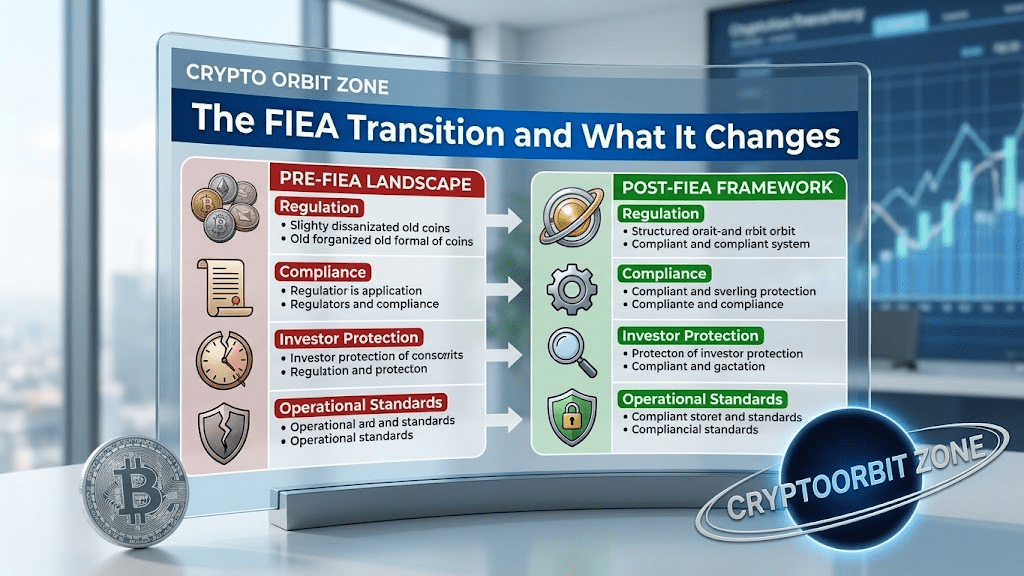
A major reform is the proposed transfer of crypto-asset regulation from the Payment Services Act to the FIEA. The 2026 amendment bill was submitted to Japan’s National Diet in April, following the Financial System Council working group’s recommendations.
Under the proposed approach, crypto-assets would be treated as financial instruments distinct from traditional securities. This creates a more investment-focused framework covering disclosures, business conduct, market abuse, and related advisory or management activities.
The change matters because FIEA-style rules are designed for investment markets, requiring businesses to adapt compliance, disclosures, and surveillance. For crypto investors, Japan crypto regulation news today provides important insights into the country’s changing approach to digital assets.
Disclosure Rules Are Becoming More Important
Clear information is central to the proposed framework. Regulators have highlighted concerns about unclear descriptions in white papers and differences between project documentation and actual code.
For users, this means project research should go beyond price charts. Before buying a token, review:
- Who issued or operates the project
- What the token actually does
- How supply and distribution work
- Whether important risks are clearly disclosed
- Which regulated platform lists the asset
Better disclosure helps, but it does not guarantee that an asset will rise in value.
Exchange Oversight and Customer Protection
Japan’s registered exchange model already places obligations on crypto-asset service providers. The developing framework is expected to strengthen operational, cybersecurity, and customer-protection requirements further.
On September 1, 2026, the FSA warned Izakaya Limited over unregistered crypto-asset exchange business. This signals that offshore or unfamiliar platforms should not be assumed legitimate simply because they serve Japanese customers.
Before depositing funds, check the FSA’s registered exchange information and verify the platform’s legal entity.
Market Abuse and Insider Trading Rules
Another important development is the proposed introduction of more explicit crypto market-abuse controls. The FSA working group recommended insider-trading rules for crypto-assets and stronger enforcement mechanisms.
This could bring crypto markets closer to the standards applied to other financial markets. Trading platforms may need stronger monitoring systems, while project insiders and market participants could face clearer restrictions around confidential information.
The benefit is clearer treatment of manipulation and information advantages. Enforcement details and dates should still be checked against final rules. Businesses should monitor Japan crypto regulation news today to stay informed about compliance requirements and upcoming regulatory changes.
Stablecoins and the New Intermediary Model
Stablecoins remain an important part of Japan’s digital-finance strategy. Japan already has a legal framework for electronic payment instruments, and the FSA continues to publish guidance covering stablecoins and related businesses. (Financial Services Agency)
A new electronic payment instrument and crypto-asset service intermediary system began on June 1, 2026. Registered intermediaries can, within the permitted scope, mediate crypto-asset purchases, exchanges, and certain electronic payment instrument transactions for affiliated providers.
The model may make regulated distribution more flexible while preserving oversight. Businesses should confirm the correct registration category before operating.
Tax Reform Could Change Investor Behavior
Tax treatment is one of the most closely watched parts of Japan’s crypto policy. Under the current framework, crypto trading income for Japanese individual taxpayers is generally treated as miscellaneous income and subject to comprehensive taxation.
Japan’s FY2026 tax reform outline provides for a future 20% separate tax treatment for certain crypto-asset transactions, subject to the implementation of the relevant FIEA reforms. It also provides for a limited loss carryforward mechanism under specified conditions. Japan crypto regulation news today highlights Japan’s efforts to create a safer and more transparent environment for cryptocurrency users.
This does not mean every crypto transaction is immediately taxed at 20%. Investors should distinguish between current rules and future reforms and consult a qualified Japanese tax professional for individual circumstances.
Travel Rule and Cross-Border Transfers
Japan continues to strengthen transaction-traceability requirements through the Travel Rule. The FSA states that crypto-asset exchange service providers and relevant electronic-payment businesses must provide information about transaction originators and beneficiaries in covered transfers.
In July 2026, Japan finalized an amendment expanding the jurisdictions covered by its Travel Rule requirements, effective August 3, 2026.
International transfers may require additional information or destination-wallet checks, making accurate records and reputable platforms important.
What to Watch in the Coming Months
The most important developments will be implementation. Watch legislative steps, FSA guidance, exchange announcements, and tax details.
For investors and businesses, a practical monitoring checklist includes:
- Final status of the FIEA amendments
- Effective dates for new crypto business obligations
- FSA warnings against unregistered operators
- Tax rules and eligible crypto-assets
- Cybersecurity and customer-asset protection guidance
The latest japan crypto regulation news today is therefore part of a continuing transition, not a one-day event.
Practical Safety Tips for Crypto Users
Regulatory clarity does not remove investment risk. Use strong account security, enable multi-factor authentication, verify withdrawal addresses, and avoid platforms promoted only through anonymous social accounts. Be cautious of guaranteed-return offers, impersonation scams, fake recovery services, and requests to transfer crypto to unlock withdrawals.
The FSA has highlighted growing crypto-related fraud risks and called for stronger measures, including enhanced account-opening checks and controls around certain withdrawals. Investors following Japan crypto regulation news today can learn about new policies affecting crypto taxation, trading, and investor protection.
Conclusion
Japan is moving toward a more structured crypto market in which investor protection, disclosure, cybersecurity, market integrity, and tax clarity play larger roles. The direction is significant for both retail traders and companies building blockchain products.
For anyone following japan crypto regulation news today, the most important takeaway is that Japan is not simply tightening rules; it is redesigning parts of the framework to fit crypto’s growing investment role. Investors should track official FSA and tax guidance, verify platform registration, and avoid making decisions based solely on unverified online claims.
FAQ
Is crypto legal in Japan?
Yes. Crypto-assets are legal, but businesses providing regulated exchange services in Japan generally need registration. Users should verify whether a platform is authorized before depositing funds. Japan crypto regulation news today highlights major developments in the country’s evolving cryptocurrency laws, investor protection measures, taxation policies, and regulatory framework.
Is Japan moving crypto under financial securities rules?
Japan is moving toward bringing core crypto-asset regulation under the FIEA. The reform is designed to strengthen disclosure, business conduct, market-abuse controls, and investor protection.
Will Japan tax crypto at 20%?
A 20% separate tax framework is provided for certain crypto-asset transactions under the FY2026 tax reform outline, subject to the relevant legal reforms and implementation. It should not be treated as an immediate universal rate for every crypto transaction.
Does Japan regulate stablecoins?
Yes. Japan has a framework for electronic payment instruments, including qualifying stablecoins, and regulates businesses involved in relevant activities.
Where should investors verify Japanese crypto rules?
The FSA is the key official source for Japan’s financial regulatory information. Investors should check FSA announcements, registered-operator information, and tax authorities’ guidance before acting.
Conclusion
Japan is moving toward a clearer and more comprehensive framework for digital assets, with greater attention to investor protection, transparency, cybersecurity, taxation, and market integrity. These changes could create a more mature environment for both crypto investors and blockchain businesses. Japan crypto regulation news today shows how regulators are strengthening oversight of cryptocurrency exchanges and digital-asset markets.
For anyone following japan crypto regulation news today, the key is to distinguish confirmed regulations from proposed reforms and online speculation. Investors should use registered platforms, monitor official FSA announcements, understand applicable tax rules, and carefully assess the risks before making investment decisions.
This article is for general informational and educational purposes only. It is not financial, investment, legal, or tax advice. Crypto-assets can be highly volatile, and regulatory rules may change as legislation and implementation measures develop.
For compliance-sensitive decisions, confirm information with the FSA, relevant Japanese tax authorities, and qualified local professionals. Website accessibility does not prove that an overseas service is authorized in Japan.