

Introduction
Imagine opening a bank account online without uploading documents repeatedly. Picture logging into healthcare portals, government services, and business platforms using a single secure digital identity that you fully control.
That future is becoming reality.
As organizations move toward digital-first operations, identity verification has become a major challenge. Data breaches continue to expose sensitive information. Identity theft costs billions of dollars annually. At the same time, users want more privacy and control over their personal data.
This is where blockchain digital identity management patents are making a significant impact.
Companies around the world are investing heavily in blockchain-based identity solutions. Many are protecting their innovations through patents. These patents cover everything from decentralized identity systems to biometric authentication and privacy-preserving verification methods.
According to industry reports, digital identity technologies are expected to become a critical component of future financial services, healthcare systems, government platforms, and online commerce. As a result, patent activity in this field continues to accelerate.
In this guide, you’ll learn how blockchain identity patents work, who owns the most influential innovations, which technologies are shaping the industry, and what the future may hold.
Executive Summary
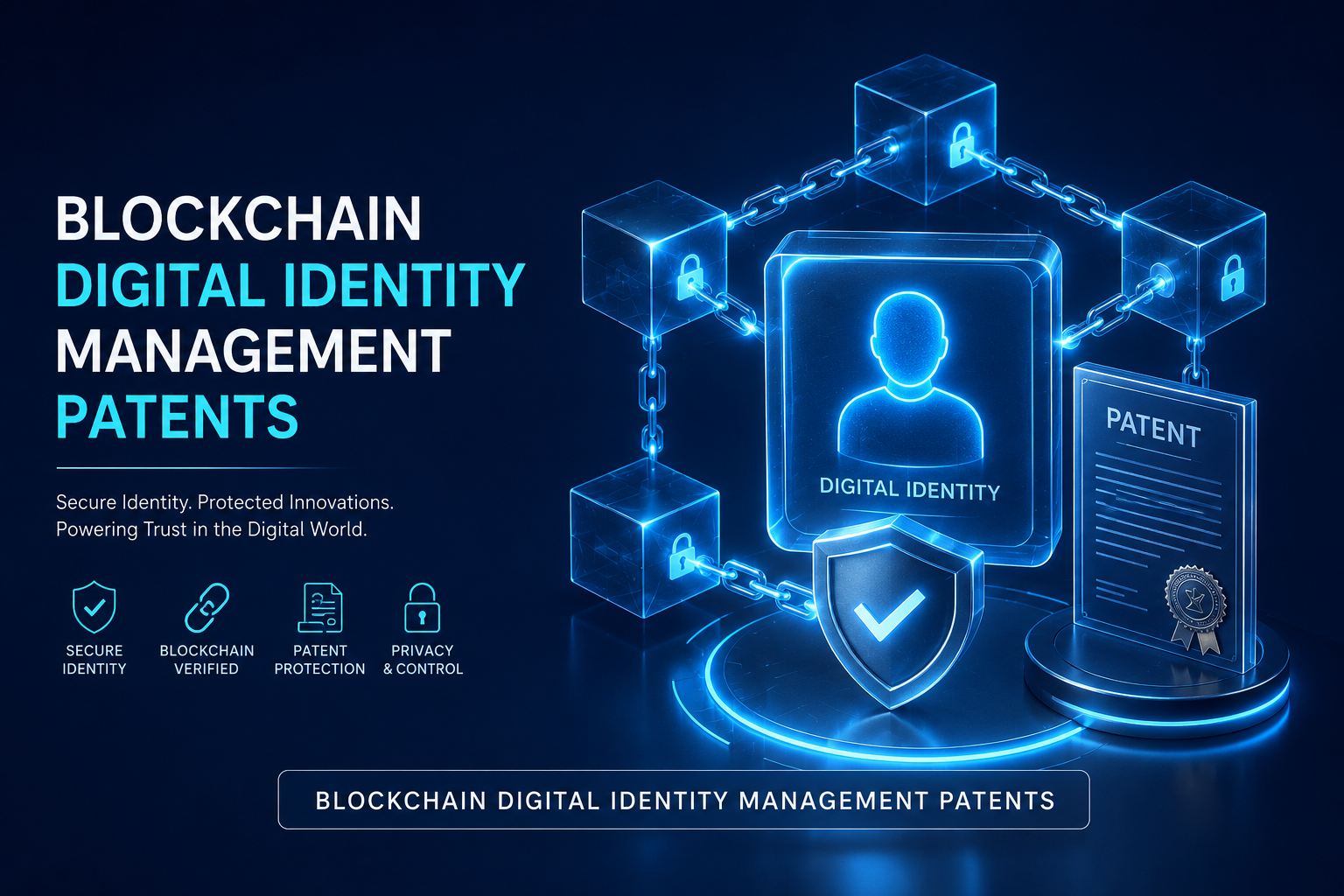
Blockchain digital identity management patents protect innovations that combine blockchain technology with identity verification and management systems.
Key takeaways include:
- Blockchain enables secure and tamper-resistant identity records.
- Patents help companies protect unique identity solutions.
- Financial institutions are major adopters.
- Governments are exploring decentralized identity frameworks.
- Privacy-focused verification methods are gaining momentum.
- Self-sovereign identity is becoming a leading trend.
- Patent filings continue to increase worldwide.
Notable organizations active in this space include IBM, Microsoft, Mastercard, Accenture, Ping Identity, Oracle, Civic, Dock, Sphereon, and Hyperledger.
By the end of this article, you’ll understand the technologies, costs, opportunities, challenges, and future outlook surrounding blockchain identity patents.
What Are Blockchain Digital Identity Management Patents?
Understanding the Basics
A patent grants legal protection for a new invention.
In the context of digital identity, patents may cover:
- Identity verification methods
- Decentralized identity systems
- Biometric authentication processes
- Identity recovery mechanisms
- Credential management solutions
- Privacy-preserving verification methods
When blockchain is integrated into these systems, the resulting innovation may qualify for patent protection.
Simple Definition
Blockchain digital identity management patents are legal protections for technologies that use blockchain networks to create, verify, manage, or secure digital identities.
Why Digital Identity Needs Blockchain
Traditional identity systems have several weaknesses.
| Challenge | Impact |
|---|---|
| Centralized databases | Attractive targets for hackers |
| Repeated verification | Poor user experience |
| Data silos | Limited interoperability |
| Identity fraud | Financial losses |
| Privacy concerns | Reduced trust |
Blockchain addresses many of these issues.
Key Advantages
Tamper Resistance
Records stored on blockchain are difficult to alter.
Transparency
Authorized participants can verify records independently.
User Control
Users can own and manage their credentials.
Reduced Fraud
Cryptographic verification improves security.
Cross-Platform Identity
A single identity can work across multiple services.
How Blockchain Identity Patents Work
Most patented systems combine several technologies.
Core Components
Blockchain Ledger
Stores identity proofs and verification records.
Cryptography
Protects sensitive information.
Decentralized Identifiers (DIDs)
Enable user-controlled identities.
Verifiable Credentials
Allow trusted organizations to issue credentials.
Smart Contracts
Automate identity validation processes.

Types of Blockchain Identity Patents
Decentralized Identity Patents
These patents focus on user-controlled identity systems.
Popular applications include:
- Digital wallets
- Online authentication
- Government IDs
Biometric Verification Patents
Combine blockchain with:
- Fingerprint recognition
- Facial recognition
- Voice authentication
Identity Recovery Patents
Help users regain access to digital identities securely.
Credential Verification Patents
Enable instant verification of credentials without revealing unnecessary information.
Major Patent Holders in Blockchain Digital Identity
Several organizations have built strong patent portfolios.
IBM
IBM has filed numerous blockchain patents involving identity verification and enterprise security.
Strengths
- Enterprise adoption
- Large patent portfolio
- Strong research capabilities
Weaknesses
- Complex implementations
- Higher deployment costs
Microsoft
Microsoft has invested heavily in decentralized identity initiatives.
Strengths
- Cloud integration
- Enterprise ecosystem
- Developer tools
Weaknesses
- Learning curve for new users
Mastercard
Mastercard holds patents related to identity verification and secure digital transactions.
Strengths
- Financial sector expertise
- Global reach
Weaknesses
- Primarily focused on payment ecosystems
Accenture
Accenture develops identity management solutions for governments and enterprises.
Strengths
- Consulting expertise
- Enterprise deployment experience
Weaknesses
- Often requires custom implementation
Leading Tools and Platforms
The following tools influence the blockchain identity ecosystem.
| Tool | Best For | Pricing |
|---|---|---|
| Hyperledger Indy | Enterprise identity | Open-source |
| Hyperledger Aries | Credential exchange | Open-source |
| Microsoft Entra Verified ID | Enterprise verification | Custom |
| Civic | Consumer identity | Custom |
| Dock | Verifiable credentials | Freemium |
| Sphereon | SSI solutions | Custom |
| Oracle Blockchain Platform | Enterprise integration | Premium |
| Ping Identity | Workforce identity | Enterprise |
| IBM Blockchain Solutions | Large organizations | Enterprise |
| Trinsic | Developer-friendly identity | Subscription |
Tool Reviews and Comparisons
Hyperledger Indy
Pros
- Open-source
- Strong community support
- Decentralized architecture
Cons
- Technical setup
- Requires specialized knowledge
Best Use Case
Government and enterprise identity systems.
Civic
Pros
- User-friendly
- Strong privacy focus
Cons
- Limited enterprise customization
Best Use Case
Consumer identity verification.
Dock
Pros
- Easy credential issuance
- Growing ecosystem
Cons
- Smaller market presence
Best Use Case
Educational and professional credentials.

Benefits of Blockchain Digital Identity Patents
Encourages Innovation
Companies invest more when intellectual property is protected.
Creates Competitive Advantage
Patents help organizations differentiate themselves.
Attracts Investors
Strong patent portfolios often increase investor confidence.
Supports Licensing Revenue
Patent owners can generate licensing income.
Drawbacks and Challenges
Patent Complexity
Blockchain patents often involve complex technical claims.
Regulatory Uncertainty
Identity regulations vary by jurisdiction.
Interoperability Issues
Different platforms may not communicate effectively.
Patent Disputes
Rapid innovation increases litigation risk.
Step-by-Step Implementation Process
Step 1: Define Identity Requirements
Determine:
- User types
- Verification needs
- Compliance requirements
Step 2: Select Blockchain Infrastructure
Choose between:
- Public blockchain
- Private blockchain
- Consortium blockchain
Step 3: Design Credential Framework
Develop credential issuance and verification processes.
Step 4: Integrate Security Controls
Implement encryption and access management.
Step 5: Test and Audit
Conduct security assessments before deployment.
Cost Analysis
Estimated Implementation Costs
| Component | Small Business | Enterprise |
|---|---|---|
| Development | $10,000–$50,000 | $100,000–$500,000+ |
| Security Audits | $5,000–$20,000 | $25,000–$100,000 |
| Infrastructure | $500–$5,000/month | $10,000+/month |
| Compliance | $5,000–$25,000 | $50,000+ |
Actual costs vary significantly by project complexity.
Case Study 1: Banking Identity Verification
Problem
A regional bank faced lengthy onboarding times.
Strategy
The bank implemented blockchain credential verification.
Execution
Customer identity data was verified once and reused securely.
Results
- 60% faster onboarding
- Reduced fraud investigations
- Improved customer satisfaction
Lesson Learned
Reusable credentials reduce friction dramatically.
Case Study 2: University Credential Verification
Problem
Employers struggled to verify academic records.
Strategy
A blockchain credential system was introduced.
Execution
Graduates received verifiable digital credentials.
Results
- Verification time dropped from days to minutes
- Reduced administrative workload
Lesson Learned
Credential verification is a strong blockchain use case.
Case Study 3: Healthcare Identity Management
Problem
Patients maintained multiple healthcare accounts.
Strategy
A decentralized identity framework was implemented.
Execution
Patients controlled access to their records.
Results
- Improved privacy
- Better record sharing
- Reduced duplicate accounts
Lesson Learned
Patient-controlled identity improves trust.
Case Study 4: Government Digital Services
Problem
Citizens repeatedly submitted identification documents.
Strategy
A blockchain identity system was piloted.
Execution
Government agencies shared verified credentials.
Results
- Faster service delivery
- Reduced administrative costs
Lesson Learned
Inter-agency cooperation unlocks significant value.
Best Practices for Blockchain Identity Patents
Focus on Real Problems
Avoid patenting theoretical concepts.
Prioritize Privacy
Privacy concerns continue to grow.
Design for Interoperability
Cross-platform compatibility increases adoption.
Build Regulatory Compliance Early
Compliance is easier when considered from the start.

Common Mistakes to Avoid
| Mistake | Consequence |
|---|---|
| Ignoring regulations | Compliance risks |
| Poor user experience | Low adoption |
| Weak recovery systems | Lost identities |
| Over-centralization | Reduced blockchain benefits |
| Insufficient security testing | Vulnerabilities |
Industry Trends
Self-Sovereign Identity (SSI)
Users increasingly want control over their data.
Zero-Knowledge Proofs
Verification without revealing personal information.
AI-Powered Verification
Artificial intelligence improves fraud detection.
Cross-Border Identity Systems
Global identity frameworks are emerging.
Digital Wallet Adoption
Identity wallets are becoming mainstream.
Future Predictions
Over the next decade:
- Governments will issue more digital credentials.
- Decentralized identifiers will become common.
- Identity wallets will replace many physical documents.
- Patent competition will intensify.
- Privacy-preserving technologies will dominate new filings.
Organizations that secure valuable intellectual property today may become future market leaders.
People Also Ask
Are blockchain identity patents increasing?
Yes. Patent filings continue to grow as digital identity adoption expands.
Can blockchain eliminate identity theft?
No system is perfect, but blockchain can significantly reduce fraud risks.
What is self-sovereign identity?
It allows individuals to control their own digital identities.
Are blockchain identity systems legal?
Many jurisdictions permit them, though regulations vary.
Who owns the most blockchain identity patents?
Large technology and financial companies hold substantial portfolios.
Frequently Asked Questions
1. What are blockchain digital identity management patents?
They protect inventions that combine blockchain technology with identity systems.
2. Why are these patents important?
They encourage innovation and protect intellectual property.
3. Which industries use blockchain identity solutions?
Finance, healthcare, education, government, and e-commerce.
4. What is a decentralized identifier?
A DID is a unique identifier controlled by the user.
5. Can startups obtain blockchain identity patents?
Yes, provided their inventions meet patent requirements.
6. How much does patent protection cost?
Costs vary by country and legal complexity.
7. What is the biggest challenge?
Balancing privacy, usability, and compliance.
8. Are identity patents profitable?
Some generate licensing revenue and strategic advantages.
9. Do patents slow innovation?
Some critics argue they can, while supporters say they encourage investment.
10. What technologies will shape future patents?
SSI, AI verification, and zero-knowledge proofs.
Internal Link Suggestions
- What Is Decentralized Identity?
- Self-Sovereign Identity Explained
- Blockchain in Healthcare
- Blockchain in Banking
- Digital Credential Verification
- Smart Contract Security
- Enterprise Blockchain Solutions
- Hyperledger Indy Guide
- Blockchain Privacy Technologies
- Zero-Knowledge Proofs Explained
- Identity Fraud Prevention
- Patent Strategies for Blockchain Startups
- Blockchain Compliance Frameworks
- Digital Wallet Security
- Future of Web3 Identity
External Resource Suggestions
- World Intellectual Property Organization (WIPO)
- National Institute of Standards and Technology (NIST)
- Decentralized Identity Foundation (DIF)
Conclusion
The race to secure digital identity innovation is accelerating. Blockchain digital identity management patents sit at the intersection of cybersecurity, privacy, compliance, and intellectual property. They protect the technologies that could redefine how people prove who they are online.
Organizations across finance, healthcare, education, and government are investing heavily in this space. Some focus on decentralized identity. Others prioritize privacy, biometrics, or credential verification. Each approach contributes to a broader shift toward more secure and user-controlled digital ecosystems.
The most successful innovators will likely be those who balance security, usability, interoperability, and regulatory compliance. As self-sovereign identity and privacy-preserving technologies mature, patent activity is expected to grow even faster.
The question is no longer whether blockchain will influence digital identity management—it is how quickly these patented innovations will become part of everyday life. Are businesses ready for a future where individuals truly own and control their digital identities?