

Introduction
Before understanding what is trading, imagine two people looking at the same financial chart and seeing completely different opportunities.
One sees a random collection of lines moving up and down. The other sees potential opportunities worth thousands of dollars.
The difference is not luck. It is understanding.
A few years ago, a college student I met started with just $500 in a trading account. He believed trading was easy money. Within three weeks, he lost nearly 40% of his capital because he followed social media tips without a plan. After learning risk management and basic market analysis, he became consistently profitable over time.
His experience is common.
Millions of people search for information about trading every year. Yet many still misunderstand what trading actually means. Some think it is gambling. Others believe it guarantees fast wealth.
The truth lies somewhere in between.
Trading is the process of buying and selling financial assets to profit from price movements. These assets may include stocks, forex currencies, cryptocurrencies, commodities, indices, and exchange-traded funds (ETFs).
Modern technology has made trading more accessible than ever. Anyone with an internet connection can open an account and participate in global markets. However, accessibility does not eliminate risk.
Many beginners ask what is trading because they want to understand how traders profit from market price movements.
This guide explains everything you need to know about trading, including how it works, the different types of trading, common mistakes, useful tools, costs, future trends, and practical strategies.
Executive Summary
Key Takeaways
- What is trading, you must first learn how buyers and sellers interact in financial markets.
- Trading involves buying and selling assets to profit from price changes.
- Popular markets include stocks, forex, crypto, commodities, and ETFs.
- Successful traders focus on risk management before profits.
- Technical and fundamental analysis help traders make decisions.
- Modern tools like TradingView, MetaTrader 5, and Binance simplify market analysis.
- Beginners should start small and prioritize education.
- Most trading losses come from poor discipline rather than poor strategies.
- AI and automation are changing how traders analyze markets.
By the end of this article, you will understand how trading works, what tools professionals use, how much it costs to start, and which mistakes to avoid.
What Is Trading?
Trading is the act of buying and selling financial instruments with the goal of generating a profit.
Unlike investing, which often focuses on long-term growth, trading usually targets shorter-term price movements. A simple way to explain what is trading is the process of buying and selling assets to benefit from changes in market value.
For example:
- Buy a stock at $100.
- Sell it at $120.
- Earn a $20 profit per share.
The same concept applies to currencies, cryptocurrencies, commodities, and other financial assets.
Simple Trading Definition
Trading is the exchange of financial assets between buyers and sellers to profit from market price changes.
How Does Trading Work?
Markets operate through supply and demand.
Knowing what is trading becomes easier when you understand the basic process behind every trade.
When more people want to buy an asset, prices tend to rise.
When more people want to sell, prices usually fall.
Basic Trading Process
| Step | Action |
|---|---|
| 1 | Analyze the market |
| 2 | Identify an opportunity |
| 3 | Place a buy or sell order |
| 4 | Manage risk |
| 5 | Exit the trade |
| 6 | Calculate profit or loss |
Most traders use brokers or exchanges to access markets.
Types of Trading
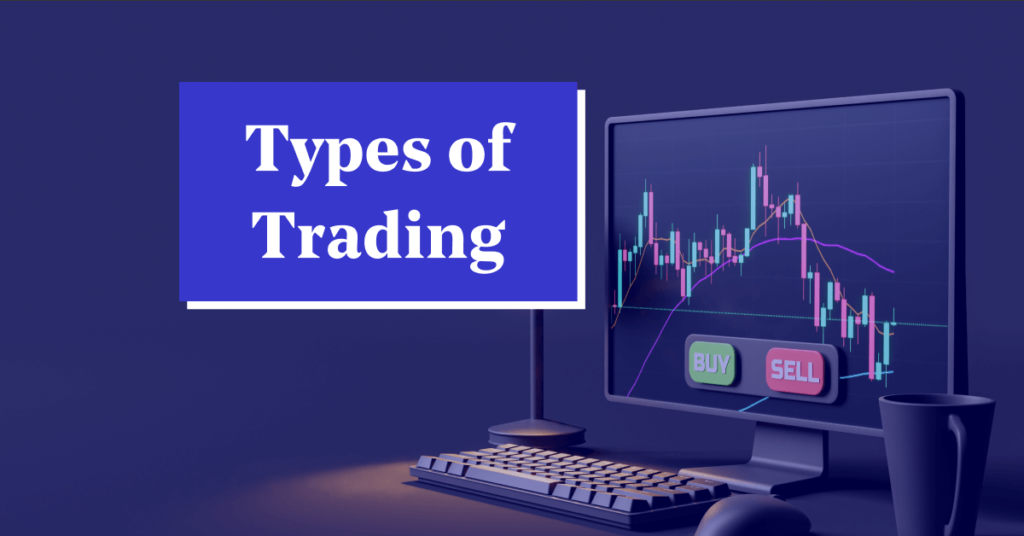
Day Trading
Day traders open and close positions within the same day.
Advantages
- No overnight risk
- Frequent opportunities
- Fast feedback
Drawbacks
- Requires constant attention
- Emotionally demanding
Swing Trading
Swing traders hold positions for several days or weeks.
Advantages
- Less screen time
- Suitable for part-time traders
Drawbacks
- Overnight market risk
Scalping
Scalpers seek very small profits from many trades.
Advantages
- Numerous opportunities
Drawbacks
- High stress
- Requires fast execution
Position Trading
Position traders hold trades for months or years.
Advantages
- Less market noise
- Lower stress
Drawbacks
- Requires patience
Markets You Can Trade
Stock Trading
Buying and selling company shares.
Examples:
- Apple
- Microsoft
- NVIDIA
Forex Trading
The foreign exchange market trades currencies.
Popular pairs include:
- EUR/USD
- GBP/USD
- USD/JPY
Forex is the largest financial market in the world.
Cryptocurrency Trading
Popular cryptocurrencies include:
- Bitcoin
- Ethereum
Crypto markets operate 24/7.
Commodity Trading
Examples include:
- Gold
- Silver
- Crude Oil
- Natural Gas
Trading vs Investing
| Feature | Trading | Investing |
|---|---|---|
| Time Horizon | Short-term | Long-term |
| Frequency | High | Low |
| Risk | Higher | Moderate |
| Analysis | Technical + Fundamental | Mostly Fundamental |
| Goal | Profit from price moves | Wealth accumulation |
Benefits of Trading
Flexibility
You can trade from almost anywhere.
Potential Income
Profitable traders can generate significant returns.
Liquidity
Many markets allow fast entry and exit.
Learning Opportunities
Trading improves financial literacy.
Drawbacks of Trading
Risk of Loss
No strategy guarantees profits.
Emotional Pressure
Fear and greed influence decisions.
Time Commitment
Consistent success requires ongoing learning.
Market Volatility
Unexpected events can move prices quickly.
Essential Trading Concepts
Risk Management
Risk management determines long-term survival.
Many professionals risk only 1% of account capital per trade.
Stop Loss Orders
A stop loss automatically closes losing positions.
Example:
- Entry: $100
- Stop Loss: $95
Maximum loss = $5 per share.
Risk-Reward Ratio
A common target is 1:2.
Risk $100 to potentially earn $200.
Technical Analysis
Technical analysis studies price charts.
Popular indicators include:
- Moving Averages
- RSI
- MACD
- Bollinger Bands
Fundamental Analysis
Fundamental analysis evaluates economic and company data.
Examples:
- Earnings reports
- Inflation
- Interest rates
- Economic growth
Case Study 1: Beginner Stock Trader
Problem
Ahmed started trading without a strategy.
Strategy
He learned trend-following techniques.
Execution
Used moving averages and stop losses.
Results
Reduced monthly losses from 25% to under 5%.
Lesson
Discipline matters more than predictions.
Case Study 2: Forex Swing Trader
Problem
Sara overtraded currency pairs.
Strategy
Focused only on EUR/USD.
Execution
Analyzed higher timeframes.
Results
Win rate improved from 42% to 58%.
Lesson
Specialization often improves performance.
Case Study 3: Crypto Trader
Problem
Emotional buying during hype cycles.
Strategy
Created predefined entry and exit rules.
Execution
Used position sizing and stop losses.
Results
Portfolio volatility dropped significantly.
Lesson
Rules beat emotions.
Case Study 4: Part-Time Trader
Problem
Limited daily time.
Strategy
Switched from day trading to swing trading.
Execution
Reviewed charts once daily.
Results
Reduced stress and improved consistency.
Lesson
Choose a style that fits your lifestyle.
Common Trading Mistakes
Trading Without a Plan
A plan creates consistency.
Ignoring Risk Management
Many traders learn what is trading but fail because they ignore risk management.
Chasing Losses
Revenge trading usually creates larger losses.
Overleveraging
Leverage magnifies gains and losses.
Following Social Media Blindly
Always verify information independently.
Best Trading Tools and Platforms
| Tool | Pricing | Best For |
|---|---|---|
| TradingView | Free to Premium | Chart Analysis |
| MetaTrader 4 | Usually Free | Forex |
| MetaTrader 5 | Usually Free | Multi-Asset Trading |
| Binance | Trading Fees Apply | Crypto |
| Coinbase | Trading Fees Apply | Beginners |
| Interactive Brokers | Low Fees | Global Markets |
| Thinkorswim | Broker-Based | Advanced Analysis |
| Finviz | Free & Paid | Stock Screening |
| TrendSpider | Paid | Automation |
| CoinMarketCap | Free | Crypto Research |
Tool Comparison
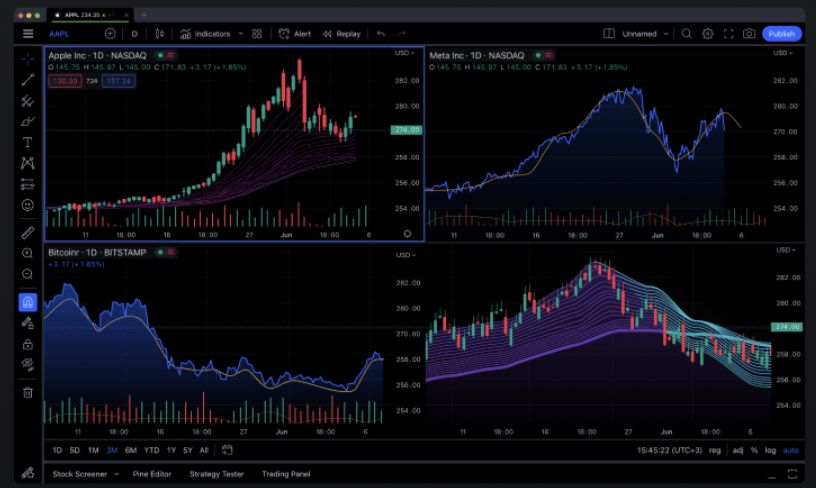
TradingView
Pros
- Excellent charts
- Huge community
Cons
- Premium features cost extra
Best Use Case
Chart analysis.
MetaTrader 5
Pros
- Advanced order types
- Automated trading support
Cons
- Interface feels dated
Best Use Case
Forex and CFD traders.
Binance
Pros
- Large crypto selection
- Competitive fees
Cons
- Regulatory restrictions in some regions
Best Use Case
Active crypto traders.
Trading Costs Explained
| Cost Type | Typical Range |
|---|---|
| Broker Fees | $0–$20 per trade |
| Spread Costs | Variable |
| Exchange Fees | Market dependent |
| Data Fees | $0–$100 monthly |
| Platform Fees | Free–$200 monthly |
Beginners should understand all costs before placing trades.
Best Practices for New Traders
Start Small
Protect your capital while learning.
Keep a Trading Journal
Track every trade.
Focus on Risk First
Profit follows survival.
Test Strategies
Use demo accounts before risking real money.
Continue Learning
Markets constantly evolve.
Industry Trends Shaping Trading
Artificial Intelligence
AI tools analyze data faster than humans.
Mobile Trading
Smartphone trading continues growing.
Algorithmic Trading
Automation is becoming more accessible.
Social Trading
Users can follow experienced traders.
Future of Trading
Over the next decade, several developments may reshape markets:
- Increased AI integration
- Better automation tools
- More retail participation
- Faster trade execution
- Improved educational resources
The traders who adapt quickly will likely gain an advantage.
Internal Link Suggestions
- What Is Forex Trading
- How to Start Stock Trading
- Best Trading Indicators
- Trading Psychology Guide
- Swing Trading Strategies
- Day Trading Basics
- Risk Management Techniques
- Technical Analysis Explained
- Fundamental Analysis Guide
- Best Trading Platforms
- Crypto Trading for Beginners
- Position Sizing Methods
- Trading Journal Templates
- Stop Loss Strategies
- Candlestick Patterns
- Portfolio Management
Recommended External Resources
- Investopedia
- CME Group Education
- SEC Investor Education
Frequently Asked Questions
1. What is trading in simple words?
Trading means buying and selling financial assets to profit from price movements.
2. Is trading the same as investing?
No. Trading focuses on shorter timeframes, while investing is usually long term.
3. Can beginners start trading?
Yes. Beginners can start with small amounts and demo accounts.
4. What is trading and how does it work?
What is trading refers to buying and selling financial assets to profit from market price movements.
5. Is trading risky?
Yes. Losses are always possible.
6. Which market is best for beginners?
Stocks are often easier for beginners to understand.
7. Can trading become a full-time career?
Yes, but it requires skill, discipline, and experience.
8. What is leverage in trading?
Leverage allows traders to control larger positions using smaller capital.
9. How long does it take to learn trading?
Most traders need months or years to develop consistency.
10. What is the biggest trading mistake?
Ignoring risk management.
Conclusion
Understanding what trading is goes far beyond learning how to buy and sell assets.
Successful trading combines knowledge, discipline, risk management, and continuous learning. The most profitable traders do not focus solely on making money. They focus on protecting capital, following proven processes, and managing emotions during uncertain market conditions.
Whether you choose stock trading, forex trading, crypto trading, or commodity trading, the principles remain similar. Learn the fundamentals, use reliable tools, keep risk under control, and develop a repeatable strategy.
The financial markets will continue evolving as AI, automation, and new technologies reshape how traders operate. Those who commit to education and adaptability will be in the strongest position to succeed.
Learning what is trading is the first step toward becoming a disciplined trader.
By now, you should have a clear understanding of what is trading and its role in financial markets.
As you begin your trading journey, ask yourself one important question:
Are you approaching trading as a disciplined business, or are you treating it like a game of chance?