

Last spring, a reader named Sara messaged our team in a panic. A coworker had tipped her about a small token that was “about to explode.” She bought in within the hour, using money she had saved for months. Nobody had shown her how to check the basics. Two weeks later, the token’s trading volume had dried up, and she could not sell without accepting a painful loss.
Sara’s story is painfully common. New tokens launch every single day, and a large share of them quietly fade toward zero. Yet most buyers still ask the same question: what is the best crypto to buy right now? The honest answer surprises many people. There is no single magic coin. There is only a repeatable process for judging any coin before your money goes in.
This guide gives you that process. You will learn how to study fundamentals, decode tokenomics, check liquidity, and manage risk like a careful investor. Nothing here is financial advice. It is an educational framework you can reuse for every future decision. For broader market coverage, the Cryptoorbitzone homepage tracks the stories that move this market daily.
Executive Summary
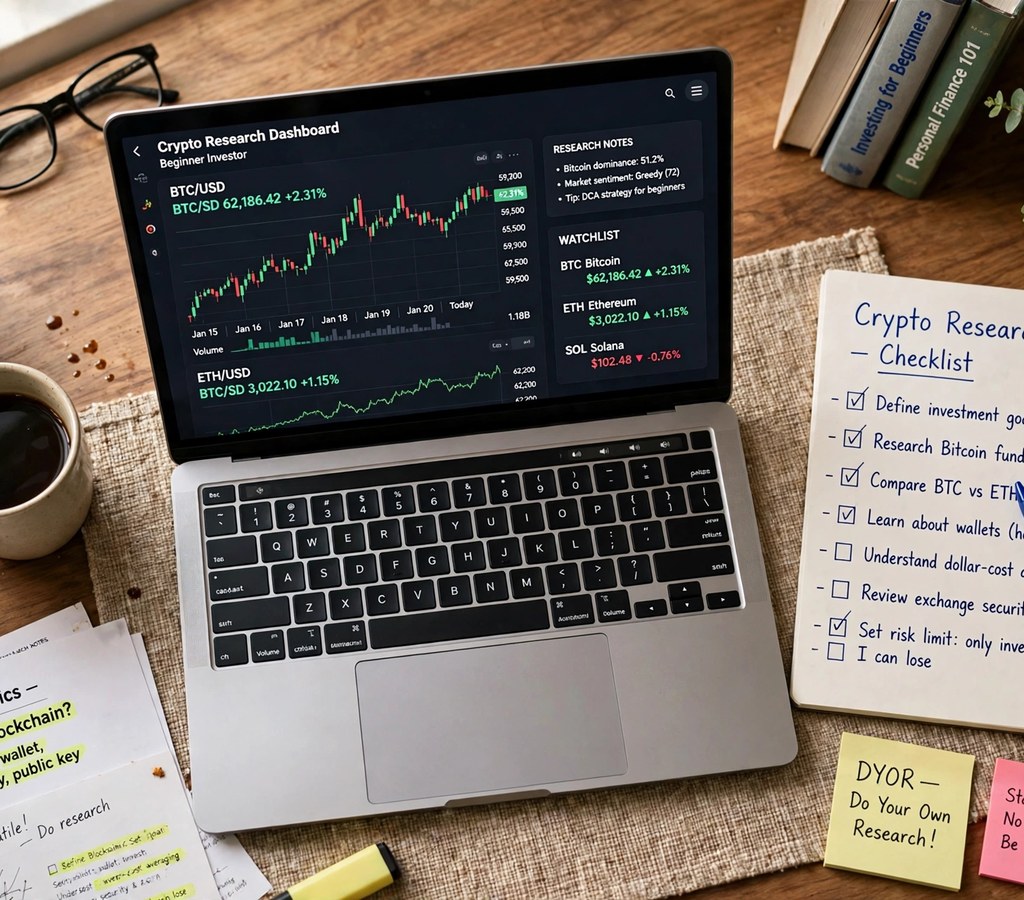
The best crypto to buy is the one that survives your own checklist, not a stranger’s hype. This article teaches a five-part evaluation framework: fundamentals, tokenomics, liquidity, team transparency, and risk management. You will compare major asset categories, from Bitcoin and Ethereum to large-cap altcoins and stablecoins. You will also walk through a step-by-step research routine that fits inside one focused hour.
Along the way, you will review ten trusted research tools, including CoinMarketCap, CoinGecko, Glassnode, and Messari. Four illustrated case studies show the framework in action, including mistakes to avoid. A cost breakdown explains the fees that quietly eat returns. Finally, ten FAQs answer the questions beginners ask most. If you want a deeper look at judging high-growth opportunities, our guide on evaluating high-growth cryptocurrency opportunities pairs well with this framework.
What “Best Crypto to Buy” Actually Means
The best crypto to buy is not the coin with the loudest fans. It is the asset whose purpose, supply rules, liquidity, and risks you genuinely understand. A coin can be “best” for a cautious saver and wrong for an active trader. Your goals, timeline, and risk tolerance define the answer.
Search engines reward simple lists, but real portfolios punish simple thinking. A hype list tells you what strangers bought yesterday. A framework tells you whether a coin deserves your money today. That shift, from chasing names to checking evidence, is the core skill this article builds.
Why Rankings Alone Mislead Beginners
Market-cap rankings show size, not quality or safety. A coin can rank highly and still carry weak technology or a risky supply schedule. Rankings also change fast during volatile weeks. Treat any ranking as a starting point for research, never as the research itself.
Matching a Coin to Your Goal
Ask one question before anything else: what job should this asset do? Some buyers want a long-term store of value. Others want exposure to smart-contract platforms or decentralized finance. Your answer shapes which metrics matter most. Our explainer on crypto investing goals can help you define that goal clearly.
The Fundamentals: What to Check First
Fundamentals describe what a project is, why it exists, and who stands behind it. Strong fundamentals do not guarantee gains. Weak fundamentals, however, reliably produce nasty surprises. Start every evaluation here, before you look at any price chart.
The Problem and the Use Case
Every serious project solves a real problem. Bitcoin offers a scarce, censorship-resistant digital asset. Ethereum powers programmable smart contracts and decentralized applications. When you study a new coin, find its one-sentence purpose. If you cannot explain the problem it solves, you do not understand the investment yet.
Read the project’s whitepaper or official documentation. Look for specifics: the technology, the target users, and the roadmap. Vague promises about “revolutionizing finance” signal marketing, not substance. The official resources at bitcoin.org and ethereum.org show how established projects document themselves.
Team, Transparency, and Track Record
Trustworthy teams show their faces and their history. Check whether founders use real names and public profiles. Look for a record of shipped products, not just announcements. Transparent projects publish regular development updates and audited code. Anonymous teams are not automatically scams, but they demand extra caution and smaller positions.
Quick Transparency Checklist
- Named founders with verifiable professional histories
- Public code repositories with recent, consistent activity
- Independent security audits from recognized firms
- Clear communication during problems, not only during rallies
- A realistic roadmap with dated, checkable milestones
Community and Developer Activity
Healthy projects attract builders, not just speculators. Developer activity shows whether anyone still improves the network. Community size matters too, but raw follower counts mislead. Look for real discussion, helpful documentation, and active support channels. A quiet, technical community often signals more substance than a loud, promotional one. Learn more in our guide to how to research a cryptocurrency project.
Tokenomics Explained in Plain Language
Tokenomics means the economic rules of a coin: its supply, distribution, and release schedule. These rules shape long-term value more than daily headlines do. A brilliant technology can still disappoint holders when its token supply floods the market. Learn to read these numbers before you buy anything.
Supply: Circulating, Total, and Maximum
Circulating supply counts the coins available today. Total supply counts all coins created so far. A maximum supply, like Bitcoin’s fixed cap, sets a hard ceiling. A large gap between circulating and total supply warns of future dilution. When new coins flood in, each existing coin represents a smaller slice of the project.
Distribution and Insider Allocations
Ask who received the early coins and at what price. Fair launches spread tokens widely among users. Risky launches hand large shares to insiders and venture funds at deep discounts. Those insiders can sell into your buying later. Project documentation usually discloses allocation percentages, so compare them across projects.
Unlock Schedules and Vesting
Many projects lock insider tokens and release them over time. These token unlocks add sell pressure on predictable dates. A large unlock can weigh on price for weeks. Tools like Token Unlocks track these calendars publicly. Checking the next twelve months of unlocks takes five minutes and prevents unpleasant surprises.
Liquidity, Market Cap, and Trading Volume
Liquidity describes how easily you can buy or sell without moving the price. It is the most underrated factor for beginners. A coin can look profitable on paper and still trap your money. Thin markets punish anyone who needs to exit quickly.
Market capitalization equals price multiplied by circulating supply. It measures size, not value or safety. Compare coins by market cap instead of price alone. A two-dollar coin is not “cheaper” than Bitcoin in any meaningful sense. For a refresher, see our explainer on market cap explained.
Check daily trading volume across several reputable exchanges. Healthy volume, spread across many venues, signals real demand. Volume concentrated on one unknown exchange signals risk. Also check the order-book depth when a platform shows it. Shallow books mean your own order can move the price against you.
Comparing the Major Asset Categories
Not every coin plays the same role. The table below compares the main categories in general educational terms. Use it to decide where a candidate belongs in your overall plan.
| Category | Well-Known Examples | Typical Role | General Risk Profile | Key Checks |
|---|---|---|---|---|
| Established store-of-value assets | Bitcoin | Long-term holding, portfolio anchor | Lower relative to most crypto, still volatile | Network security, adoption, supply rules |
| Smart-contract platforms | Ethereum and peers | Exposure to apps, DeFi, and Web3 activity | Moderate to high | Developer activity, fees, real usage |
| Large-cap altcoins | Top-ten non-stablecoin assets | Growth exposure beyond the top two | High | Liquidity, unlocks, genuine demand |
| Small-cap and new tokens | Recently launched projects | Speculation | Very high | Team identity, audits, distribution, exit liquidity |
| Stablecoins | Dollar-pegged tokens | Parking value, payments, dry powder | Lower price risk, but issuer and peg risk remain | Reserve reports, issuer reputation, redemption terms |
Notice the role of stablecoins in that table. They are not growth investments. They help you wait, plan entries, and reduce panic selling. Learn how they work in our guide to stablecoins explained. Meanwhile, market mood can shift any category quickly, as recent coverage of Bitcoin’s pullback and altcoin weakness shows.
Step-by-Step: Evaluate Any Coin in One Focused Hour
Use this repeatable routine whenever a new coin catches your eye. It turns a vague feeling into a written judgment. Keep notes for every candidate, even the ones you reject.
- Write the one-sentence thesis (5 minutes). State the problem, the solution, and why this token captures value.
- Read the documentation (15 minutes). Skim the whitepaper and official site. Flag vague claims and missing details.
- Check the tokenomics (10 minutes). Record supply figures, insider allocations, and the unlock calendar.
- Verify liquidity (10 minutes). Confirm market cap, daily volume, and listings on reputable exchanges.
- Investigate the team (10 minutes). Verify names, track records, audits, and recent development activity.
- Scan the risks (5 minutes). Search for hacks, lawsuits, regulatory warnings, and community complaints.
- Decide the position size (5 minutes). Set a maximum allocation and an exit rule before buying anything.
Regulation shapes risk too. Our analysis of CFTC crypto rules and enforcement explains why oversight news matters to everyday buyers. And when headlines scream about price targets, our breakdown of Bitcoin’s path toward major price levels shows how to read such claims calmly.
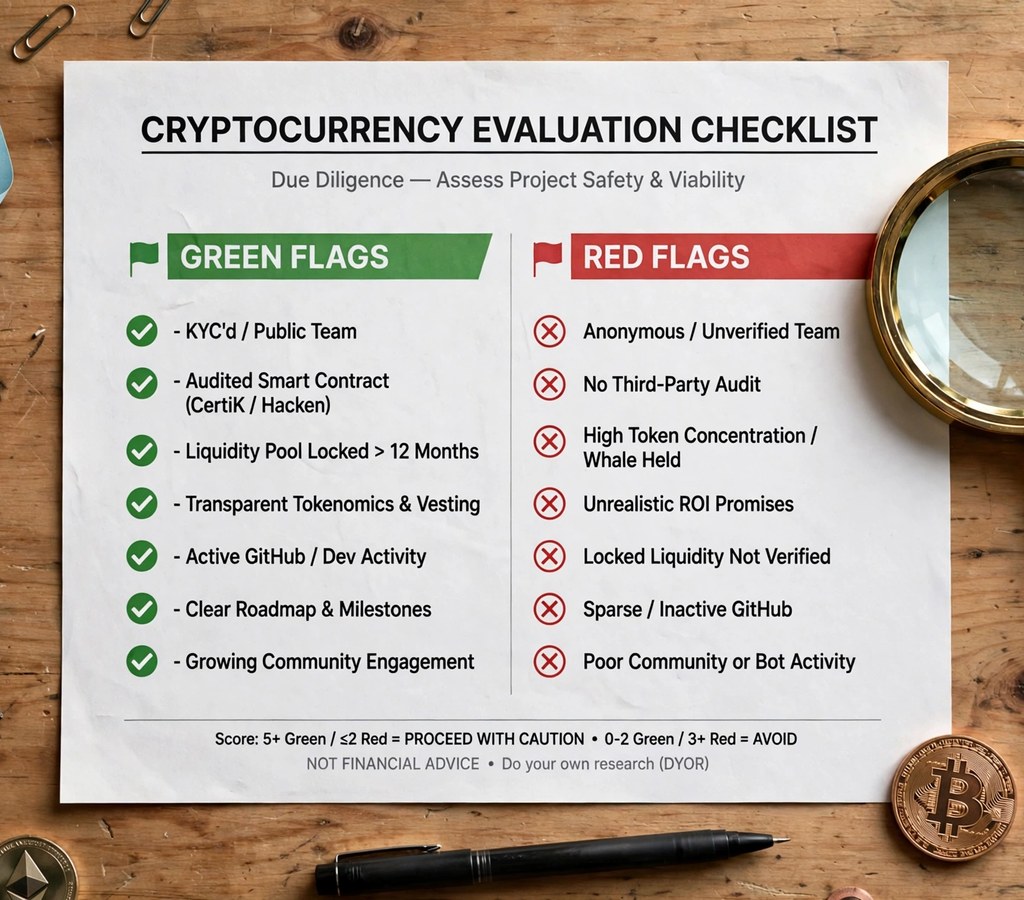
The Evaluation Criteria Checklist
Score every candidate against the same criteria. Consistent scoring stops emotion from hijacking your decisions. The table below works as a printable checklist.
| Criterion | What to Look For | Red Flag | Green Flag |
|---|---|---|---|
| Use case | A clear problem and real users | Buzzwords with no product | Working product with growing usage |
| Supply rules | Capped or slow-growing supply | Unlimited minting by insiders | Transparent, predictable issuance |
| Distribution | Wide, fair allocation | Insiders hold most of the supply | Public allocations with vesting |
| Liquidity | Strong volume on major exchanges | One small exchange, thin books | Deep books across venues |
| Team | Named, experienced builders | Anonymous team, copied biographies | Public team with shipped products |
| Security | Independent audits, bug bounties | No audit, past unexplained hacks | Multiple audits, open incident reports |
| Community | Technical discussion, real support | Paid hype and giveaway spam | Active developers and helpful users |
Benefits and Drawbacks of Evaluating Before You Buy
Doing your own research takes time. It also saves money that hype reliably destroys. Weigh both sides honestly before you commit to the habit.
| Benefits of the Framework | Drawbacks and Limits |
|---|---|
| You understand what you own and why you own it | Research takes time, especially at the start |
| You avoid most obvious scams and illiquid traps | Good research cannot remove market-wide risk |
| Written criteria make selling decisions calmer | Data sources sometimes disagree with each other |
| You spot unlock and dilution risk early | Small, new projects publish limited information |
| Position sizes match your actual risk tolerance | Analysis can create false confidence if you skip updates |
Best Practices for Safer Crypto Buying
Start small and scale slowly. Your first purchase teaches more than any article. Keep it small enough that a total loss would sting, not ruin you.
Use position sizing. Decide the maximum share of your portfolio any single coin may hold. Many cautious investors cap speculative coins at a small fraction. Our full guide to crypto risk management walks through the math in simple terms.
Consider dollar-cost averaging. Buying fixed amounts on a schedule removes timing pressure. It suits long-term believers better than lump-sum gamblers. Read our beginner walkthrough of dollar cost averaging crypto before you automate anything.
Secure your holdings. Use reputable exchanges for buying, then consider a personal wallet for long-term storage. Enable two-factor authentication everywhere. Our security guide on crypto wallet security covers the essential habits.
Keep records. Log every purchase, price, and reason. Records help with taxes, reviews, and honest self-assessment. A simple spreadsheet beats a confident memory every time.
Common Mistakes That Cost Beginners Money
Buying Because the Price Looks “Cheap”
A low unit price means nothing without supply data. Billions of tokens can make a coin expensive in total terms. Always compare market cap, never unit price alone.
Following Influencer Tips Blindly
Promoters often receive payment or early allocations. Their excitement may be an exit strategy, not analysis. When a tip excites you, run the full checklist anyway. Urgency is usually a sales tactic.
Ignoring the Unlock Calendar
Many beginners learn about unlocks only after a sudden slide. Insider releases add supply exactly when early backers want profits. Five minutes with an unlock tracker prevents this classic shock.
Putting Everything Into One Coin
Concentration magnifies both luck and disaster. Beginners rarely have the information edge that concentration demands. Diversification feels boring because it works quietly. Spread risk across categories, and keep some funds in reserve.
Selling in Panic, Buying in Euphoria
Emotions peak at exactly the wrong moments. Written entry and exit rules protect you from your own adrenaline. Review our guide on crypto investing psychology when markets test your nerves.
Expert Tips From Seasoned Researchers
Read the bear case first. Search for criticism before praise. Strong projects survive hostile questions. Weak ones hide behind community slogans.
Compare against the category leader. Ask why this coin should beat the established option. “Cheaper” is not an answer. Look for a clear technical or distribution advantage.
Watch what developers do, not what marketers say. Code commits, testnet progress, and shipped features reveal the truth. Marketing calendars reveal only spending.
Revisit your thesis quarterly. Projects change, teams pivot, and unlocks arrive. A coin that passed your checklist last year may fail it today. Schedule reviews like appointments, and read market context such as our report on what recent crypto news reveals about the market’s next shift.
Beware of guaranteed returns. United States regulators make this point plainly. The investor education material at Investor.gov warns that promises of guaranteed high returns are a classic fraud signal.
Case Studies: The Framework in Action
The four scenarios below are illustrative examples, not reports of real investors. They show how the checklist changes decisions in realistic situations. Names and details are composites created for teaching.
Case Study 1: The Trending Token and the Missing Liquidity
Problem: In this scenario, a first-time buyer named Adeel sees a small token trending on social media. Friends urge him to buy before the price “leaves forever.”
Strategy: Instead of rushing, Adeel runs the one-hour routine. He checks volume, exchange listings, and the order book before anything else.
Execution: The token trades on one small exchange with thin daily volume. Its order book shows that even a modest sell order would push the price down sharply.
Results: Adeel passes on the trade. In the scenario, the token later slides as early promoters exit, and late buyers struggle to sell.
Lessons: Liquidity is an exit door. Always check that the door exists before you walk into the room.
Case Study 2: Two Similar DeFi Tokens, One Clear Winner
Problem: A researcher named Lena wants exposure to decentralized finance. Two competing tokens look similar on price charts and social media.
Strategy: She compares fundamentals with DefiLlama data on total value locked, plus each project’s revenue and unlock schedule.
Execution: One project shows steady usage and modest, distant unlocks. The other shows falling usage and a large insider unlock within weeks.
Results: Lena chooses the first token with a small, staged position. The framework gives her a calm, documented reason for the choice.
Lessons: Usage data and unlock calendars separate substance from storytelling faster than price charts do.
Case Study 3: The Beginner Who Built a Boring Portfolio
Problem: A teacher named Marco wants crypto exposure without daily stress. Every exciting tip he reads contradicts the previous one.
Strategy: He limits himself to the established categories in the comparison table. He anchors on the largest assets, adds a stablecoin reserve, and sets fixed monthly purchases.
Execution: Marco automates small buys, reviews his thesis quarterly, and ignores daily price noise. He tracks everything in a simple spreadsheet.
Results: In this illustration, Marco sleeps well through volatile months. His outcomes depend on the market, but his process stays steady and stress stays low.
Lessons: For many beginners, the best crypto to buy is a short list of understood assets, bought slowly and reviewed calmly.
Case Study 4: The Unlock That Changed a Decision
Problem: An intermediate investor named Priya likes a mid-cap token’s technology. The community is enthusiastic and the roadmap looks credible.
Strategy: Before buying, she checks the vesting schedule on Token Unlocks and reviews the allocation chart in the documentation.
Execution: She finds that a large share of supply, allocated to early backers, unlocks within the next quarter. The circulating supply will grow quickly.
Results: Priya delays her purchase and sets a reminder to reassess after the unlock. She keeps the project on her watchlist instead of her portfolio.
Lessons: Good technology plus bad timing still makes a poor entry. The calendar is part of the analysis.
The Best Tools for Researching Crypto Before You Buy
Good tools turn hours of searching into minutes of checking. No single platform tells the whole story, so combine two or three. Here are ten resources that researchers rely on, with honest trade-offs.
1. CoinMarketCap
Pros: Huge coin database, clear market-cap rankings, and useful historical charts. Cons: Data can differ slightly from other aggregators, and new listings vary in quality. Pricing: Free core features; paid API tiers exist for developers. Best use: A first-pass snapshot of any coin’s size, price history, and exchange listings.
2. CoinGecko
Pros: Independent rankings, a useful trust score for exchanges, and strong developer and community data. Cons: The interface feels dense for total beginners. Pricing: Free with optional paid API plans. Best use: Cross-checking CoinMarketCap figures and studying a project’s developer activity.
3. Messari
Pros: Deep research reports, clean project profiles, and transparent fundraising and token-supply data. Cons: The most detailed research sits behind a subscription. Pricing: Free basic access; paid Pro plans for full reports. Best use: Serious fundamental research on mid-cap and large-cap projects.
4. Glassnode
Pros: Leading on-chain analytics that show how holders actually behave. Cons: Advanced metrics need learning time, and full access costs money. Pricing: Limited free tier; paid plans for full data. Best use: Checking whether long-term holders accumulate or distribute a major asset.
5. DefiLlama
Pros: Transparent DeFi data on total value locked, fees, and revenue across chains. Cons: Focuses on DeFi, so it covers non-DeFi tokens poorly. Pricing: Free and open. Best use: Comparing DeFi projects by real usage instead of marketing claims.
6. Etherscan
Pros: Shows raw on-chain truth for Ethereum tokens: holders, transfers, and contracts. Cons: Raw data overwhelms beginners without guidance. Pricing: Free. Best use: Verifying how concentrated a token’s holders really are.
7. TradingView
Pros: Excellent charts, community scripts, and multi-exchange price views. Cons: Chart confidence can seduce beginners into over-trading. Pricing: Free basic plan; paid tiers add features. Best use: Studying price history and volatility after fundamentals pass your checklist. Our primer on how to read crypto charts helps you start.
8. Token Unlocks
Pros: Clear vesting calendars and allocation breakdowns for many projects. Cons: Coverage of very small tokens can be incomplete. Pricing: Free core data; premium features for professionals. Best use: Checking upcoming supply releases before any purchase.
9. CryptoPanic
Pros: Fast news aggregation with community sentiment labels. Cons: Headlines amplify emotion, so use it for awareness, not decisions. Pricing: Free; optional Pro upgrade. Best use: Scanning for hacks, lawsuits, or exchange problems affecting your candidate.
10. Exchange Research Pages
Pros: Large exchanges publish free educational reports and coin profiles inside their platforms. Cons: Exchanges profit from trading, so read their optimism with care. Pricing: Free with an account. Best use: A convenient second opinion after your independent checks.
Cost Analysis: What Buying Crypto Really Costs
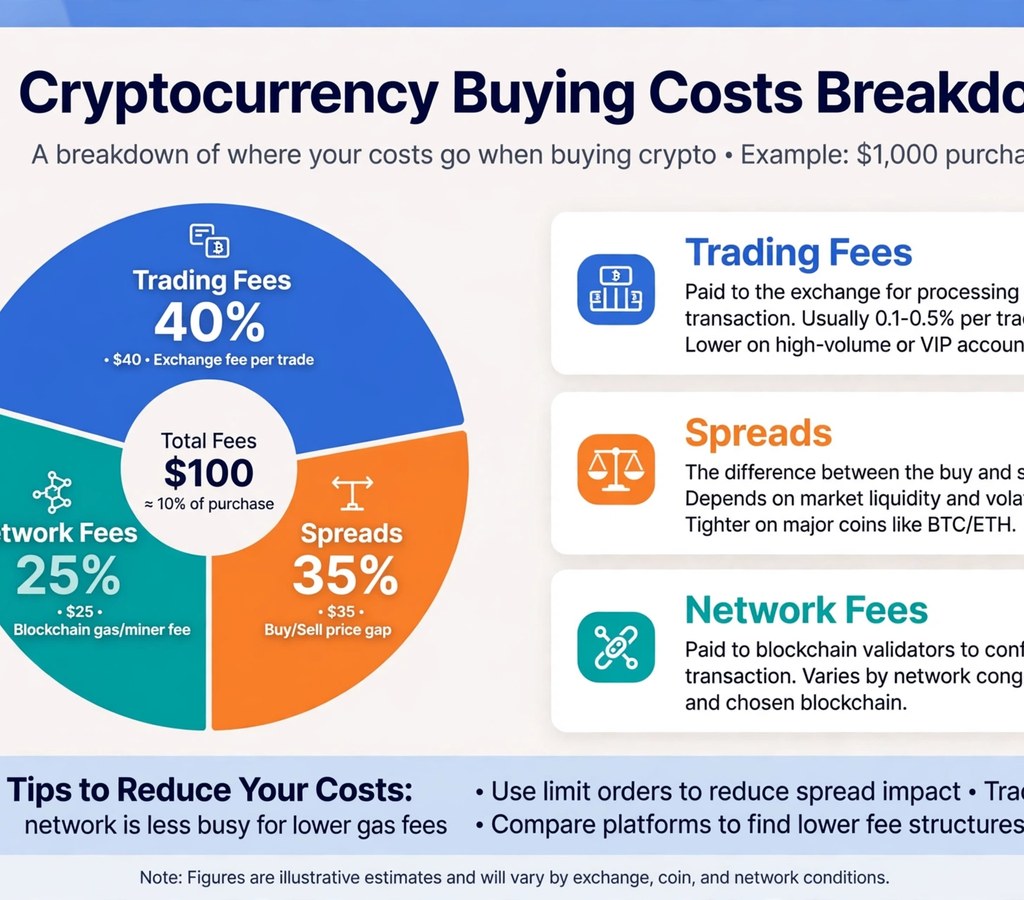
The price you see is not the price you pay. Fees hide in several places, and they compound quietly. The table below breaks down the common costs in general terms.
| Cost Type | Where It Appears | What Drives It | How to Reduce It |
|---|---|---|---|
| Trading fees | Exchange orders | Platform fee schedule, order type, and your trading volume | Compare fee schedules; limit orders often cost less than instant buys |
| Spread | Instant-buy features and thin markets | Liquidity and market volatility | Trade on deep markets; avoid one-click buys during spikes |
| Deposit and withdrawal fees | Moving money or coins on and off platforms | Payment method and network congestion | Use low-cost deposit routes; batch your withdrawals |
| Network (gas) fees | On-chain transfers, especially on busy networks | Network demand at the moment you transact | Transact during quieter periods when timing allows |
| Conversion fees | Swapping between coins or currencies | Platform pricing and liquidity of the pair | Use direct trading pairs instead of double conversions |
Many major exchanges publish trading fees that often fall roughly between 0.1% and 1.5% per trade, depending on the product and order type. Instant-buy convenience features usually cost more than standard order books. Always check the current fee schedule on the platform you use, because prices and tiers change. Small differences matter: repeated one-percent leaks can quietly erase the edge your research created.
Current Trends and the Future Outlook
Several durable trends shape how buyers should evaluate coins now. Regulation keeps expanding, which rewards transparent projects and punishes opaque ones. Institutional products have made large assets easier to access through familiar channels. Real-world asset tokenization and payment stablecoins keep attracting serious builders.
Looking ahead, expect evaluation standards to keep rising. Projects with audited code, clear disclosures, and genuine revenue will stand out more easily. Hype cycles will still arrive, because speculation never leaves this market. Your framework matters more in those moments, not less. Prepared buyers treat hype as weather: noticeable, but never a navigation system.
Troubleshooting: When Your Research Hits a Wall
Two Data Sites Show Different Numbers
Aggregators use different exchange sets and update speeds. Small differences are normal. Use a third source, prefer medians over outliers, and note the discrepancy in your research log.
The Project Has No Clear Whitepaper
Missing documentation is itself an answer. Serious teams document their technology and token rules. If you cannot find basic documents, reduce your position to zero and move on.
You Cannot Tell Whether Volume Is Real
Some low-quality venues report inflated volume. Stick to well-known exchanges and aggregators with trust scores. Compare volume across platforms, and distrust any coin whose volume lives on one obscure venue.
Your Thesis Breaks After You Buy
Teams pivot, audits fail, and markets change. A broken thesis is a sell signal, not a loyalty test. Review your written reasons, act on the evidence, and record the lesson. Our guide on when to sell cryptocurrency covers exit decisions in depth.
Frequently Asked Questions
1. What is the best crypto to buy for beginners?
There is no universal answer. Beginners usually learn fastest with the largest, most liquid assets, because data and educational resources are plentiful. Start small, understand what you own, and expand only as your knowledge grows.
2. How do I know if a crypto is worth buying?
Run the checklist: a clear use case, transparent tokenomics, real liquidity, a verifiable team, and independent audits. If a coin fails several categories, the evidence says wait. Written criteria beat gut feelings.
3. Is Bitcoin still the best crypto to buy?
Bitcoin remains the largest and most established cryptocurrency, with a fixed supply and the longest track record. Whether it fits you depends on your goals and risk tolerance. Many portfolios treat it as an anchor rather than a speculation.
4. How much money should I put into crypto?
Only invest money you can afford to lose completely. Crypto prices swing sharply, and even major assets fall hard during downturns. Set a portfolio percentage first, then split it across categories deliberately.
5. What does tokenomics mean, in simple words?
Tokenomics describes a coin’s economic rules: how many coins exist, who received them, and when new ones enter the market. These rules affect scarcity and selling pressure. They matter as much as the technology itself.
6. Why does liquidity matter so much?
Liquidity decides whether you can exit at a fair price. Thin markets trap sellers and exaggerate price moves. Always check daily volume and order-book depth before buying any smaller token.
7. Are stablecoins a good investment?
Stablecoins aim to hold a steady value, so they are tools, not growth investments. They help with payments, planning entries, and reducing volatility exposure. They still carry issuer and peg risks, so read the reserve reports.
8. How often should I review my crypto holdings?
A quarterly review suits most long-term holders. Recheck your original thesis, upcoming unlocks, and any security or regulatory news. Daily checking usually adds stress without adding insight.
9. Can research guarantee I pick the best crypto to buy?
No. Research reduces avoidable mistakes; it cannot remove market risk or predict prices. Anyone promising guaranteed results is selling something. Treat certainty claims as the loudest red flag in crypto.
10. Where can I learn more before investing?
Start with official project documentation, regulator education pages like Investor.gov, and independent research platforms such as CoinGecko and Messari. Our crypto glossary for beginners explains the vocabulary you will meet along the way.
Conclusion
The search for the best crypto to buy ends with a habit, not a ticker symbol. Judge the use case. Decode the tokenomics. Verify the liquidity. Check the team’s transparency. Size every position for the risk you can truly carry. The framework in this article turns emotional tips into calm, documented decisions.
Your next steps are simple. Pick one coin you already own or admire. Run the one-hour routine and score it against the checklist. Open free accounts on two research tools and repeat the process next week. As regulation matures and serious projects raise their standards, disciplined researchers will keep their edge while hype chasers keep paying tuition.
Disclaimer: This article is educational content, not financial advice. Cryptocurrency is volatile and risky; do your own research and consider speaking with a licensed financial professional before investing.
So here is the question worth sitting with: if your favorite coin disappeared from every social feed tomorrow, would your own research still convince you to own it?